Case study · New Feature · Keela · 2 min read
Automation for Nonprofits: When the Real Obstacle Is Fear
A no-code automation builder where the hardest design problem was fear, not complexity.
- Role
- Product Designer
- Company
- Keela2021 · about 4 months
- Team
- CTO, Product Owner, Product Manager, Lead Product Designer, SDRs
- Tools
- Figma, Linear, MailChimp, Hubspot
- Problem
- Automation was the most requested feature, and the top fear was emailing all 5,000 donors by accident.
- Decision
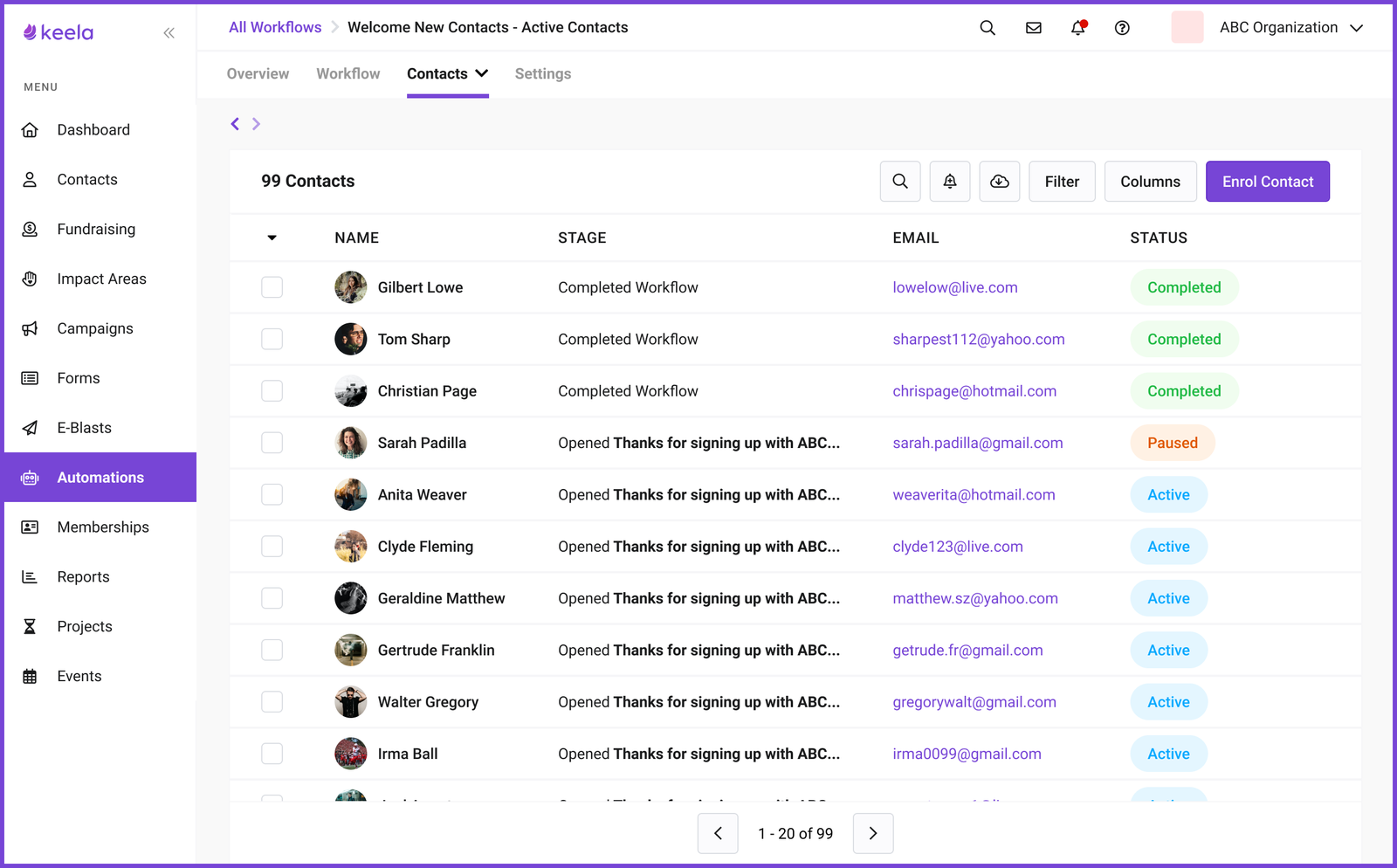
- I made confidence the design goal: a preview of exactly which contacts a workflow would touch, before anything goes live.
- Outcome
- 30% adoption across 355 organizations, contributing to a 13% ARR increase.
- Principle
- Build for confidence before capability.
Context
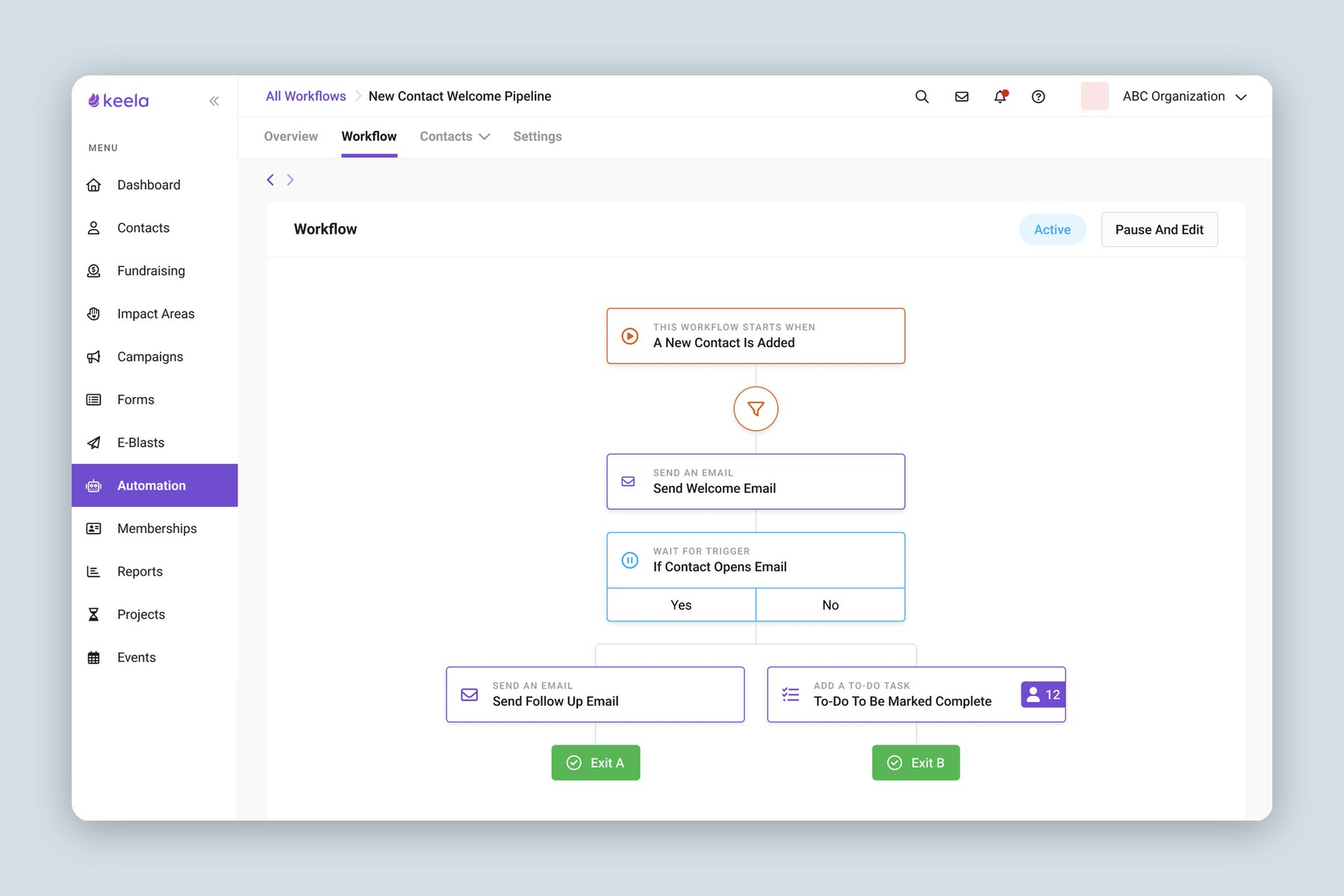
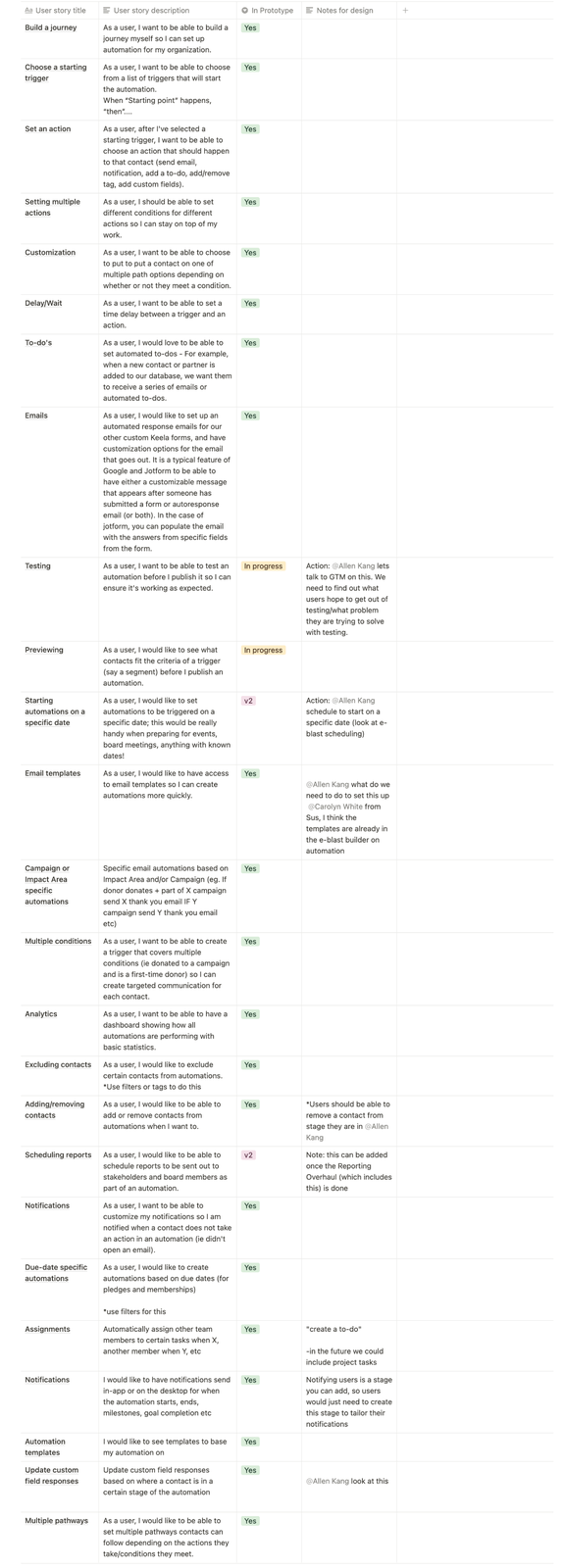
Automation was the most requested feature on the roadmap, and competitors were winning deals on it. Nonprofit staff lose hours to thank-you emails, record updates and follow-ups. With the PM and CTO, I framed it as a platform capability, not a single feature.
The Research Surprise
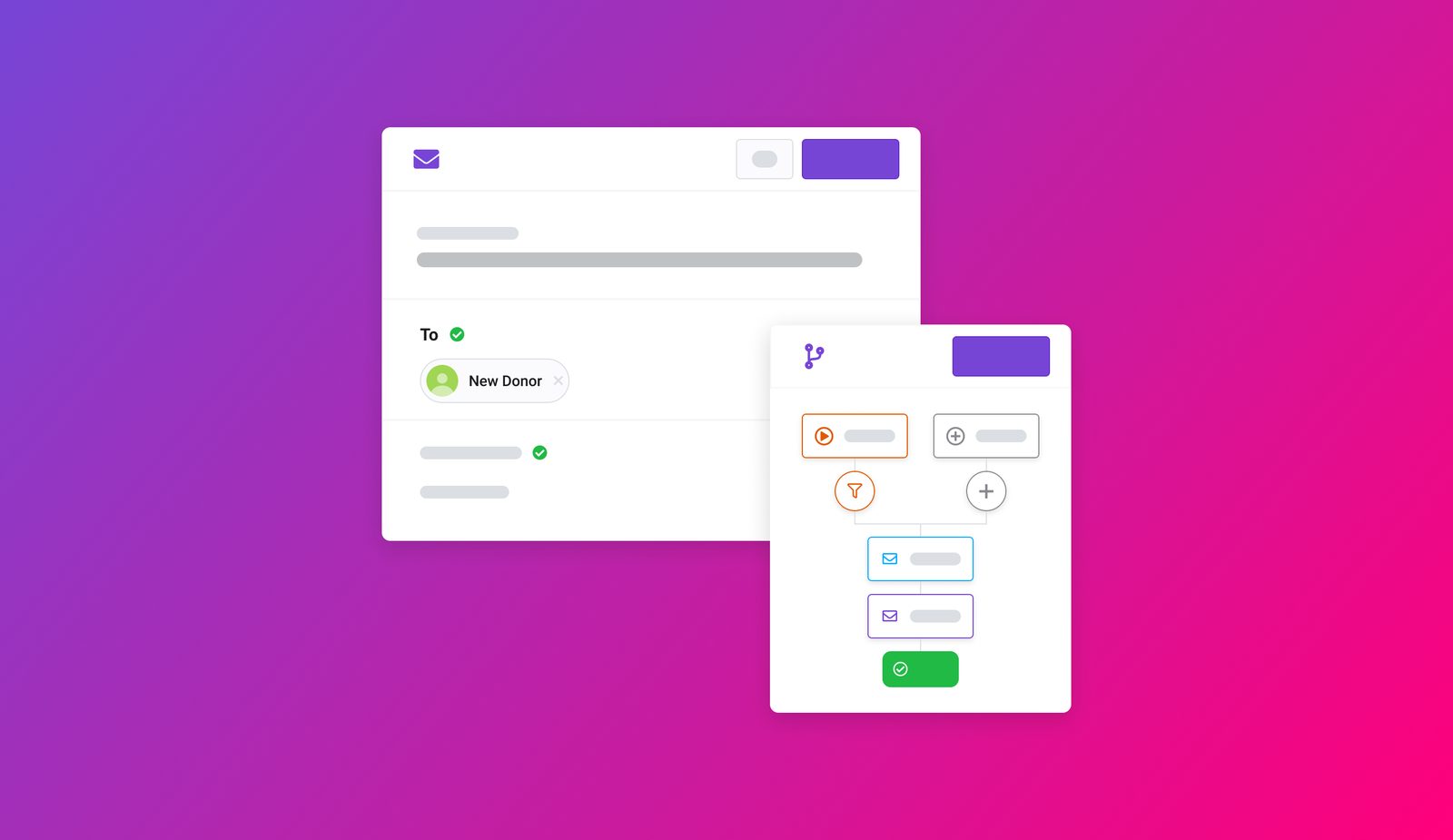
I talked to 15 nonprofit operations managers, expecting complexity concerns. The top fear was simpler:
"What if I accidentally email all 5,000 of our donors?"
The problem wasn't complexity. It was confidence. Hands-on tests of HubSpot and Mailchimp, plus a review of four other tools, showed gaps in re-enrollment and contact-level control we could fill.
The Design
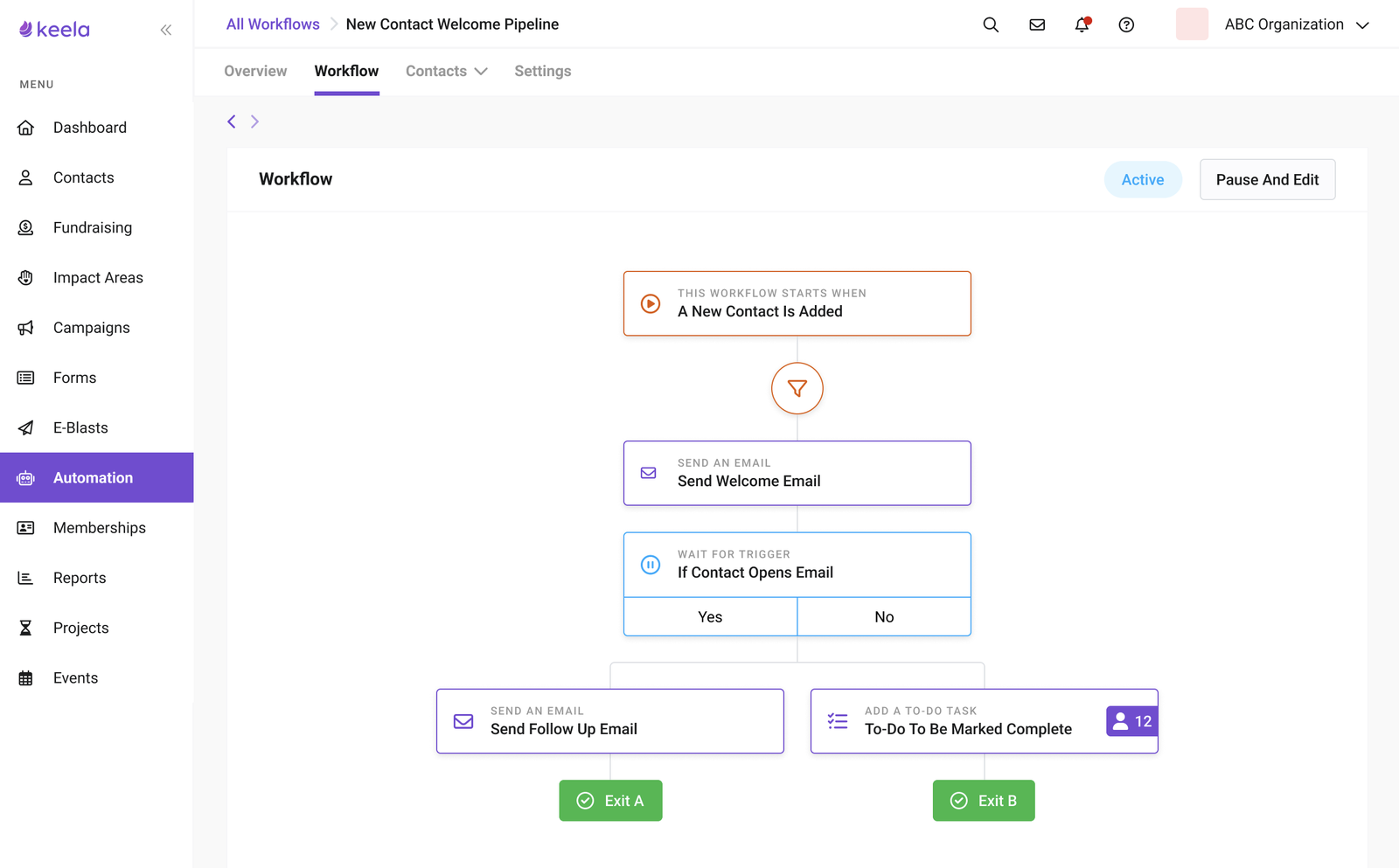
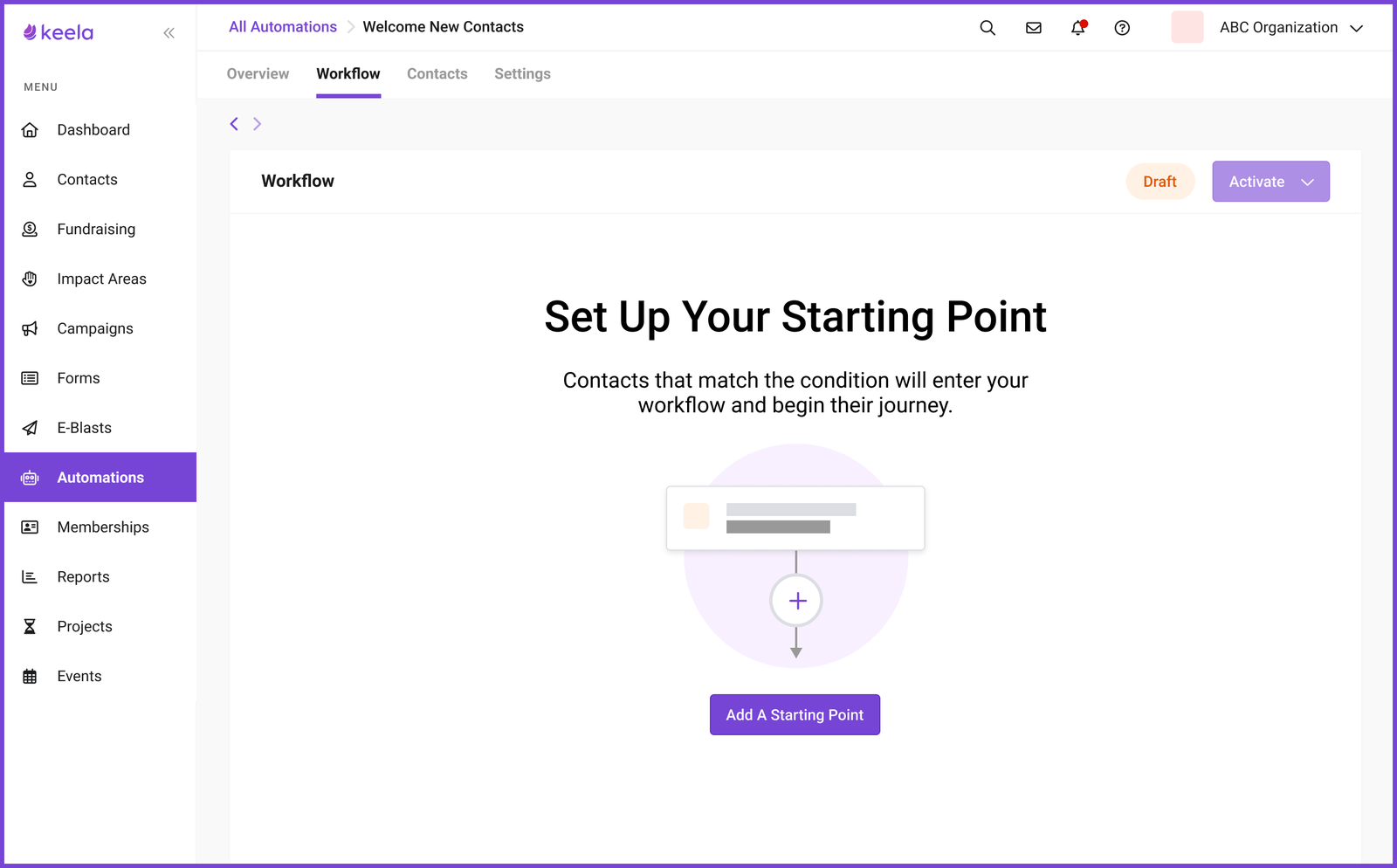
The easy version ships the workflow builder and stops. The hard problem was getting someone who had never trusted software with donor data to press activate, so every decision answers to that. The key one was preview mode: before anything goes live, you see exactly which contacts it will touch.
| The fear | The design answer | |
|---|---|---|
| 1 | "What if I accidentally email all 5,000 of our donors?" | Preview mode. See exactly which contacts a workflow will touch before it goes live. |
| 2 | A blank canvas. Not knowing where a donor journey should start. | Templated journeys. New, recurring and disengaged donor scaffolding to start from. |
| 3 | Logic hidden in forms. Hard to picture what a rule will actually do. | A visual builder. Trigger, conditions and actions laid out as a flow. |
| 4 | Too much at once. Every option shown on day one. | Progressive complexity. Custom triggers and branches appear as confidence grows. |
Three Rounds, Three Questions
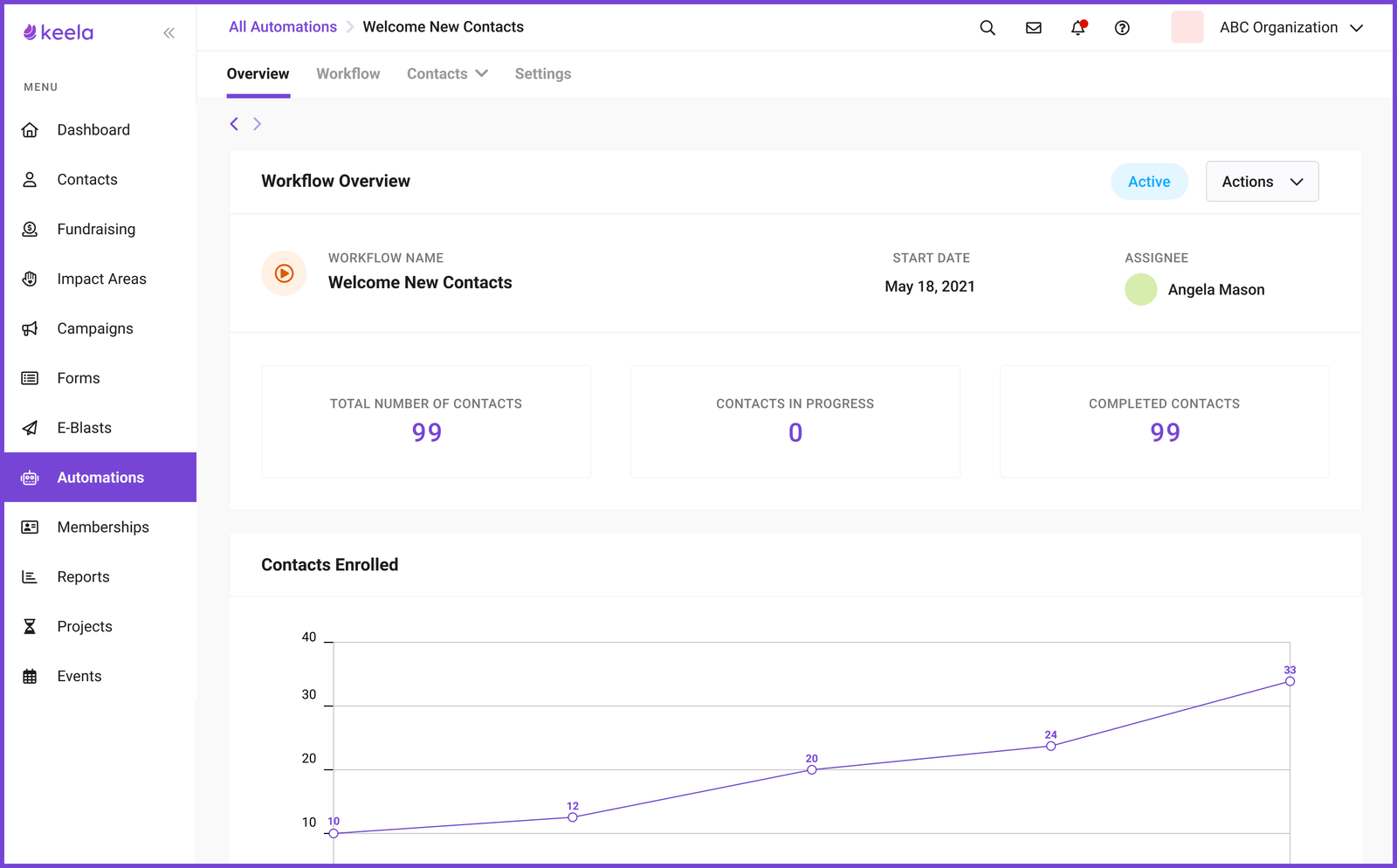
Three rounds of prototype testing: creating a workflow, monitoring one, and pausing contacts. The PM or the lead designer took notes, and each round became prioritized work in Linear.
What Happened
Automation shipped in July 2021, five months after I joined Keela, as a paid add-on. It reached 30% adoption across 355 organizations and contributed to a 13% ARR increase.
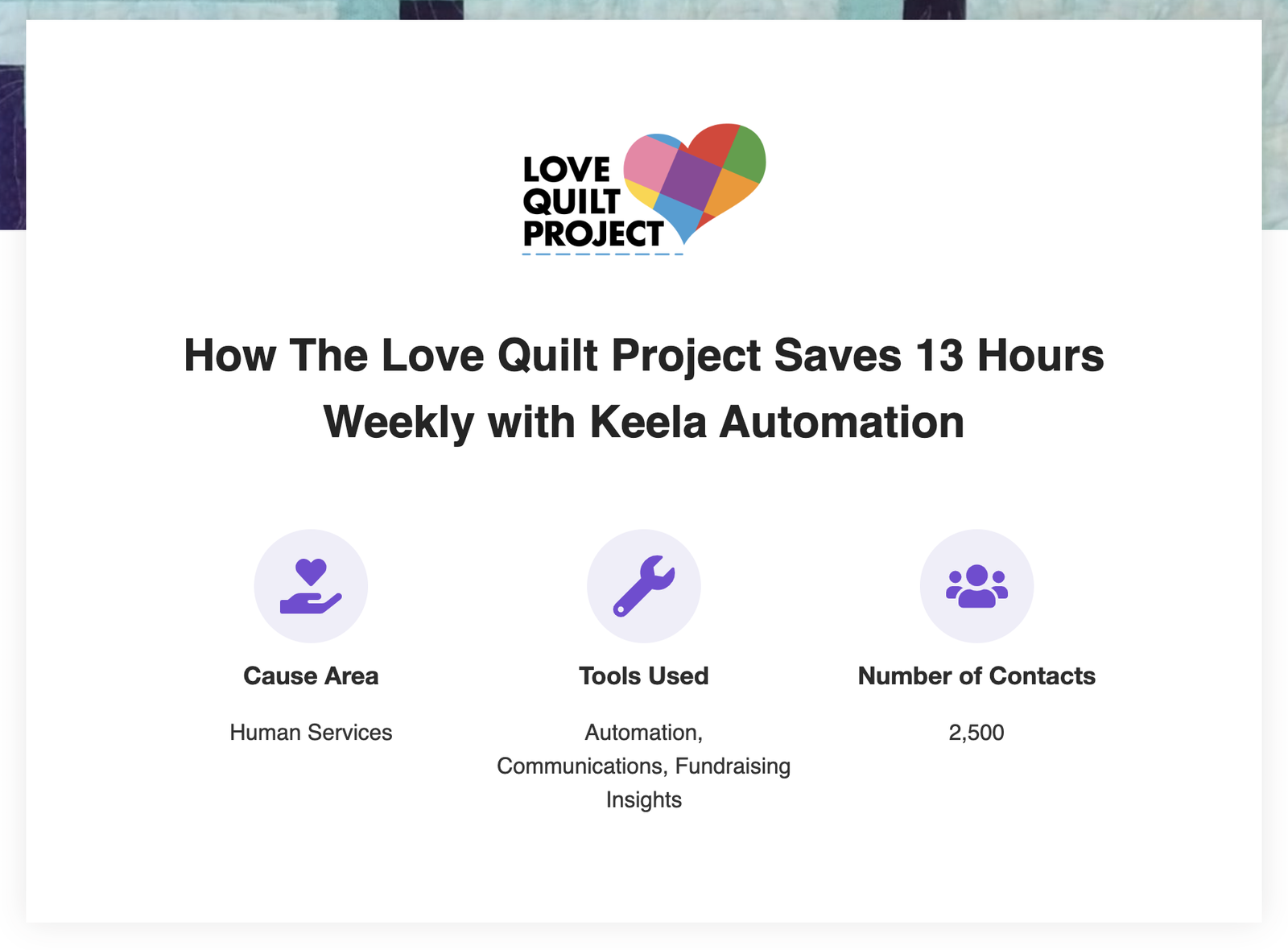
Building for confidence before capability is something I keep returning to.
What I Learned
It was first scoped at three weeks, too tight to interview, test and validate. With the PM and the lead designer, we made the case for more time, and the feature that shipped was loved by users and organizations alike.
It was also the first project where I accepted that collaboration makes a better product. I had thought every task was mine to finish alone, and I was afraid to ask for help. It's one of my proudest projects, and it couldn't have been built without the people credited below.
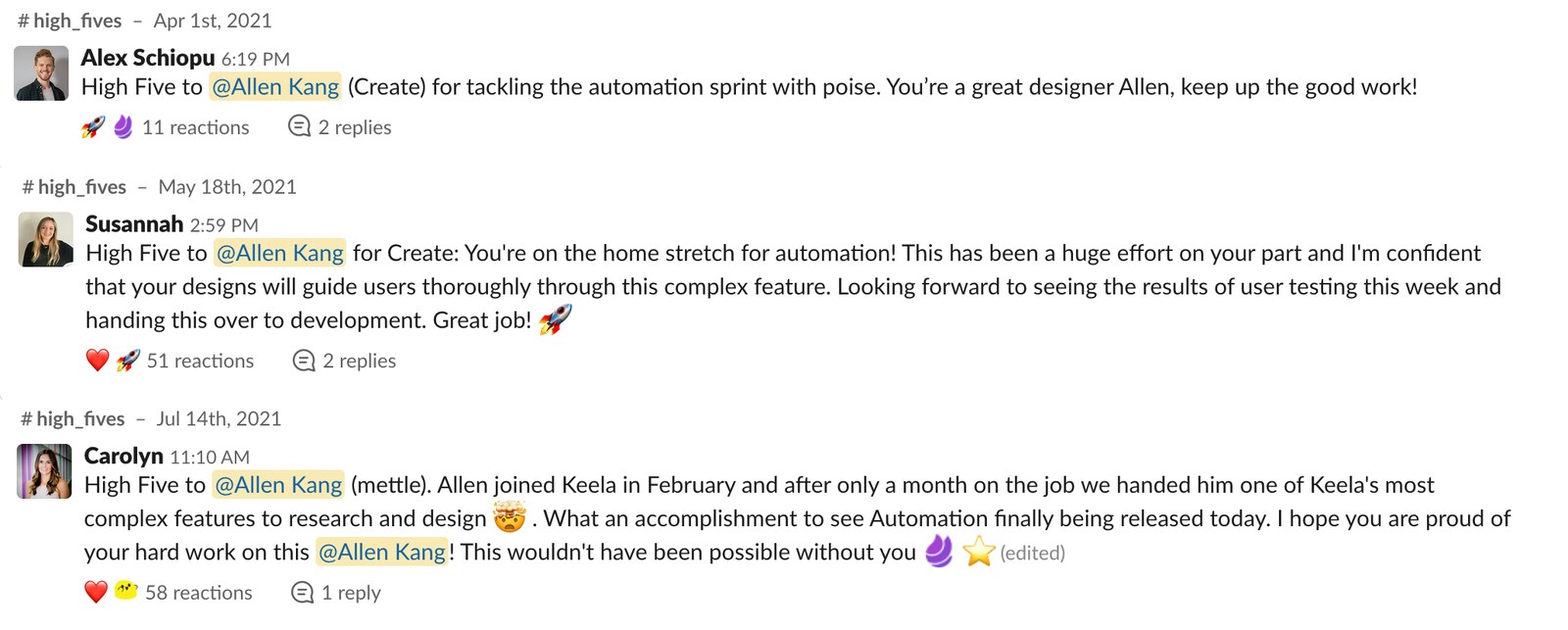
"After only a month on the job we handed him one of Keela's most complex features to research and design. What an accomplishment to see Automation finally being released today."
Carolyn, Product Manager, on release day.

Thanks for reading.