Case study · Internal Tool · Yuwol Productions · 1 min read
Toronto Yuwol: The Tools Behind a Ten-Month Musical
Internal tooling for a bilingual musical company of forty: scheduling and attendance, a Korean-English script reader used daily, and a bill splitter for a company that shares its costs.
- Role
- Designer & developer
- Company
- Yuwol Productions2025 to present
- Team
- Solo, with Claude Code
- Tools
- Next.js, React, TypeScript, Postgres
Why it exists
In 2025 I joined an amateur musical company, well outside my comfort zone, and found the operational chaos every volunteer group knows: months of rehearsals, forty people across cast, production, and promotion teams, two languages, and everything coordinated through group chat. The people were committed. The tools were a spreadsheet nobody opened and a chat nobody could search.
So I started building, one annoyance at a time.
One tool became a suite
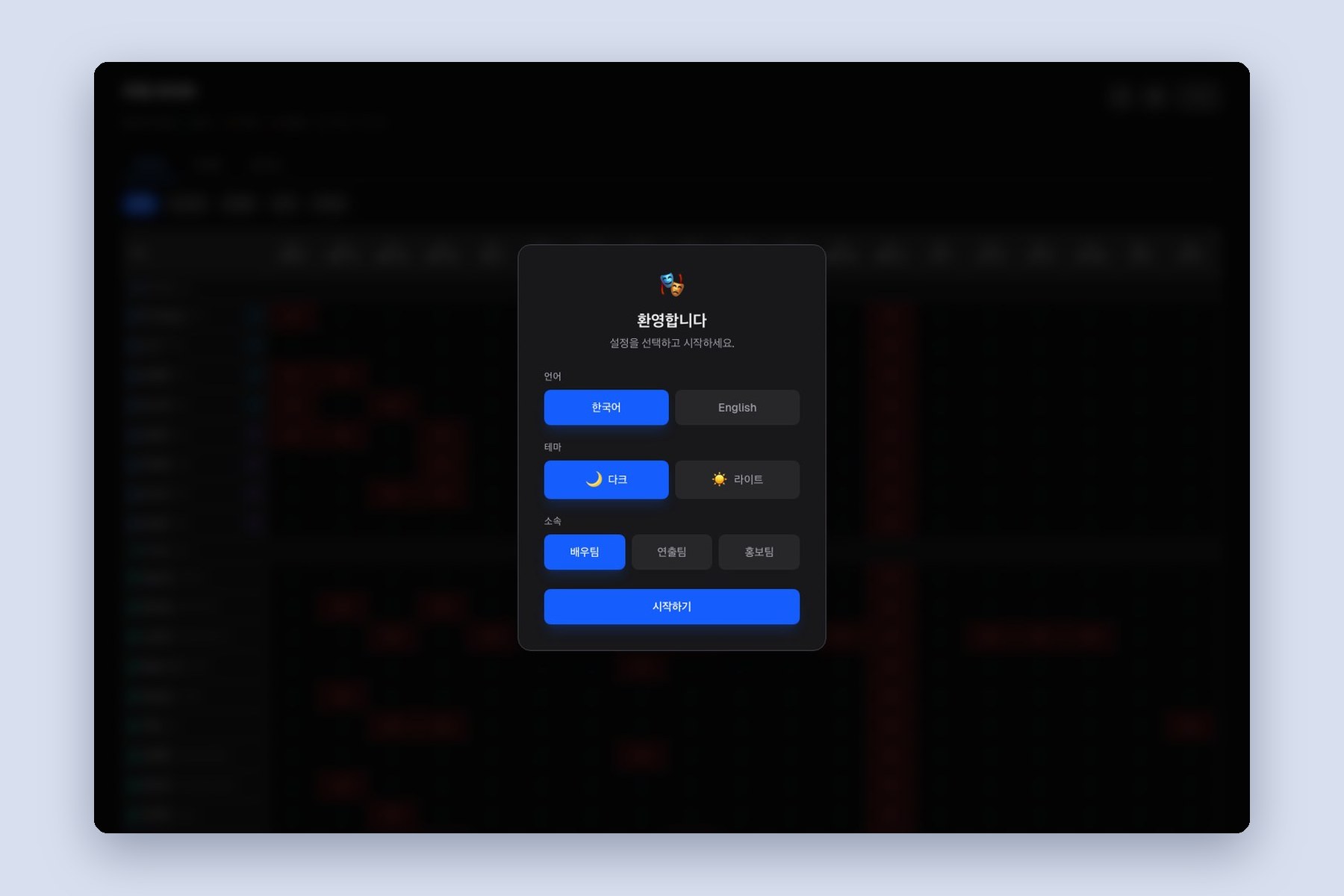
Scheduling and attendance. A shared calendar of practices and performances, with attendance tracked per date, so who's in the room is a glance instead of a thread. People pick their team and their language; the whole thing runs in Korean and English because the company does.
A bilingual script reader. Rehearsing a translated show means half the room works from Korean and half from English. The reader keeps both scripts in one place, used daily through the run, which quietly made it the most-loved thing I built for them. Try the script reader demo.
Bill splitting. Forty people sharing costs is its own coordination problem. A small app splits a bill and keeps the math out of the group chat.
The show went up in August 2026 and sold 350 tickets. Season two is underway, and so is the next round of tools.
Designing for people who see you every week
This is internal tooling in its purest form: a non-technical user base of real people I couldn't avoid, using the tools daily, telling me directly what was broken. I iterated weekly on that feedback. No analytics dashboard substitutes for the stage manager walking over to say the attendance view confused her.
Adoption was never mandated. It happened because each tool removed a specific, named annoyance, and because the people it served watched it get better every week. That's the whole playbook for internal tools, at any scale: earn the workflow, don't decree it.

Thanks for reading.