Case study · Feature Redesign · Aplos (now Velora) · 2 min read
Transaction Workflows: The Feature That Was Causing Churn
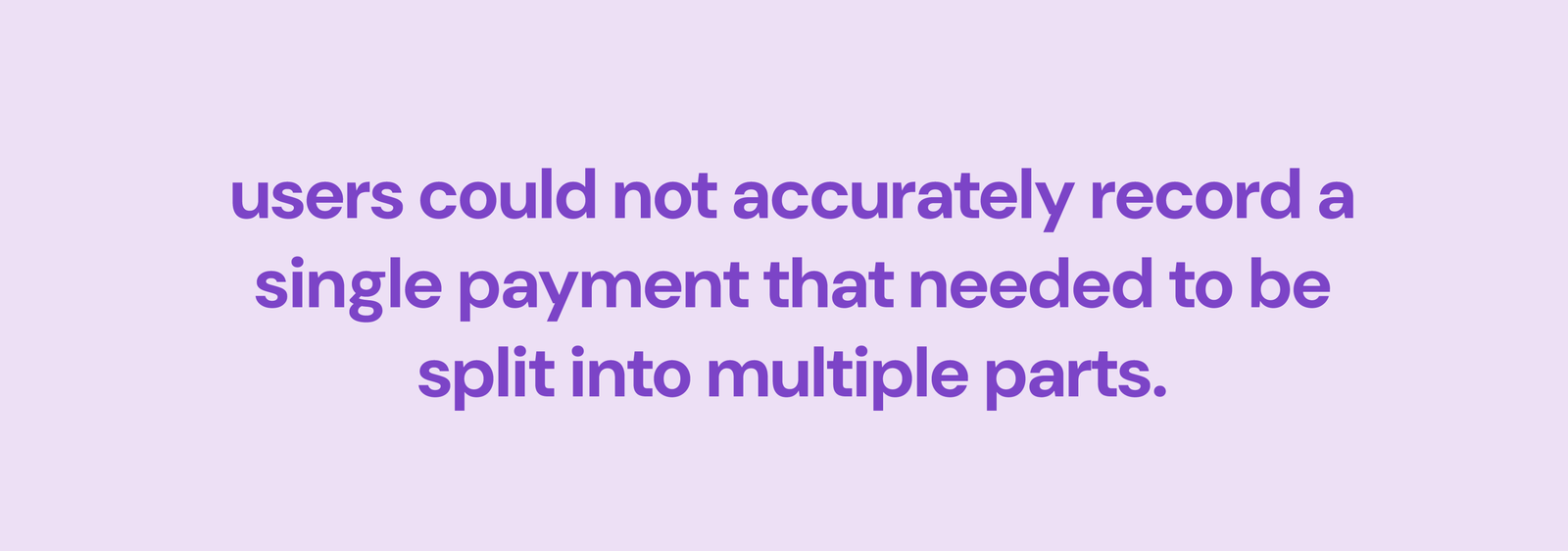
One payment can be a donation, a gift and a ticket at once. The product couldn't record that, and it was our top churn driver.
- Role
- Senior Product Designer
- Company
- Aplos (now Velora)2025 · about 3 months
- Team
- Associate Director of Product, Senior PM, 12 Engineers
- Tools
- Figma, Amplitude, Maze
- Problem
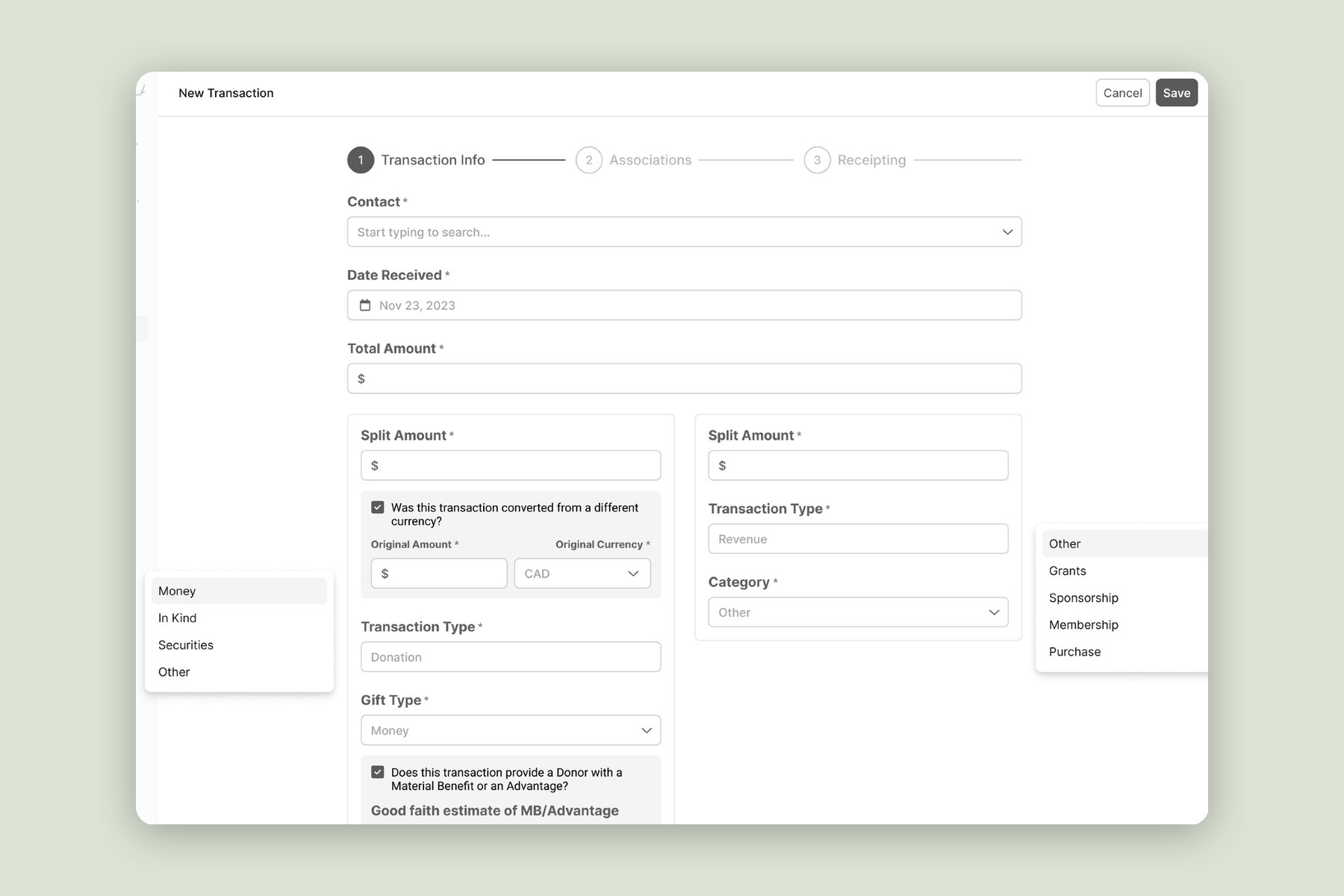
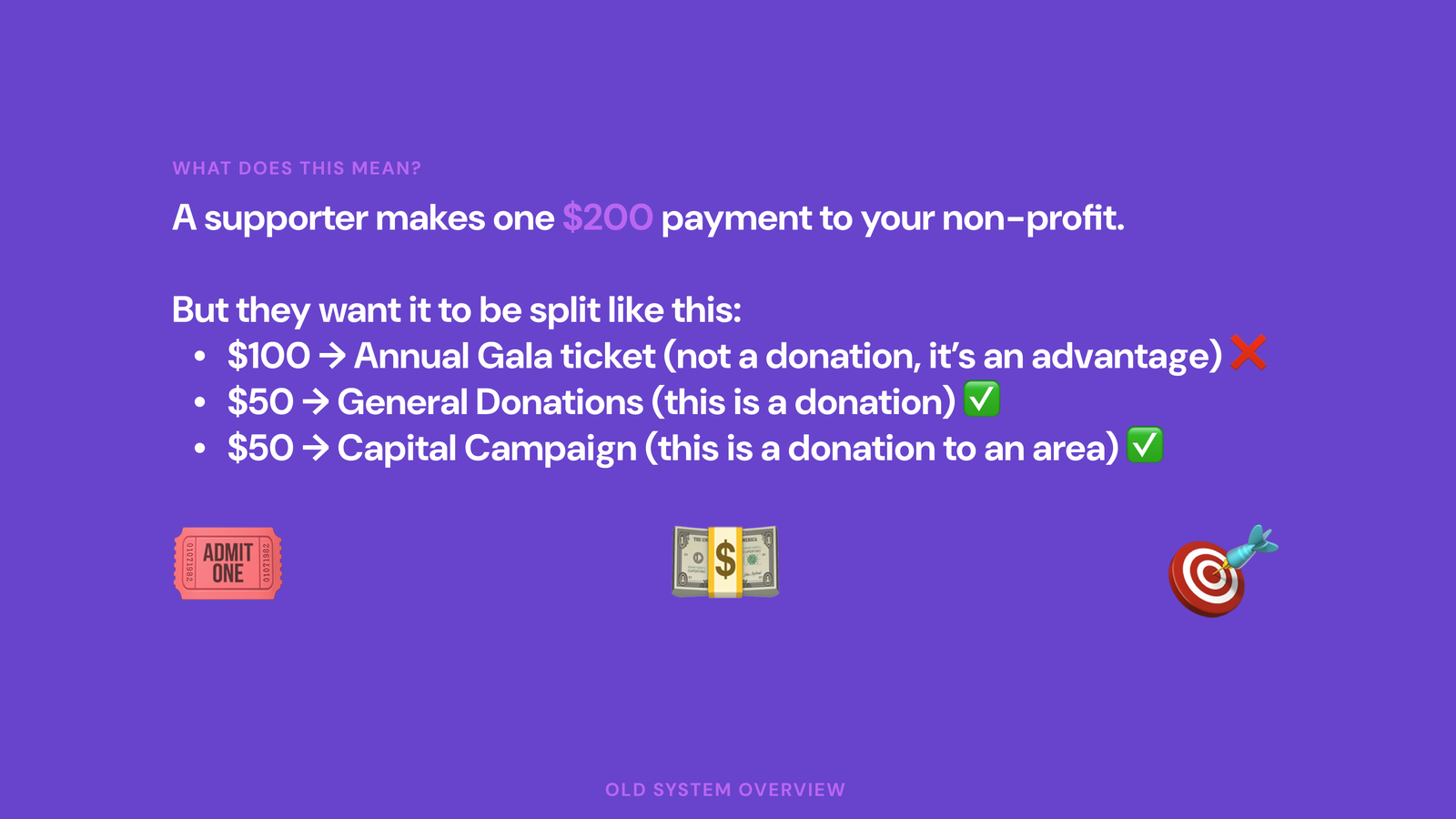
- Nonprofits could log only one type per payment, but one payment is often part donation, part in-kind gift, and part value received, like a gala ticket. That gap drove about 500 support tickets a quarter.
- Decision
- I designed for extensibility inside a no-refactor constraint: smart defaults with human override, batch editing by context, and continuous validation.
- Outcome
- 70% fewer categorization support tickets in the first month.
- Principle
- Smart defaults, human override. It became a platform-wide interaction rule.
Why This Mattered
Keela's transaction model handled one-time donations well and broke for larger nonprofits, where one payment is often a ticket, a donation and a campaign gift at once. Staff logged several records instead, which meant wrong receipts, messy books and support tickets. As the team pushed upmarket after the acquisition, it had become a growth blocker.
- 56% of newly onboarded orgs (40 of 72) voted for transaction flexibility
- ~500 support tickets a quarter tied to splitting, receipts and reporting
What I Learned From Watching People Work
I sat with 8 nonprofit accountants while they reconciled. Every one kept a parallel spreadsheet, one called batch editing "death by checkbox," and none could see a miscategorized transaction until the final report.
Design for What Breaks Next
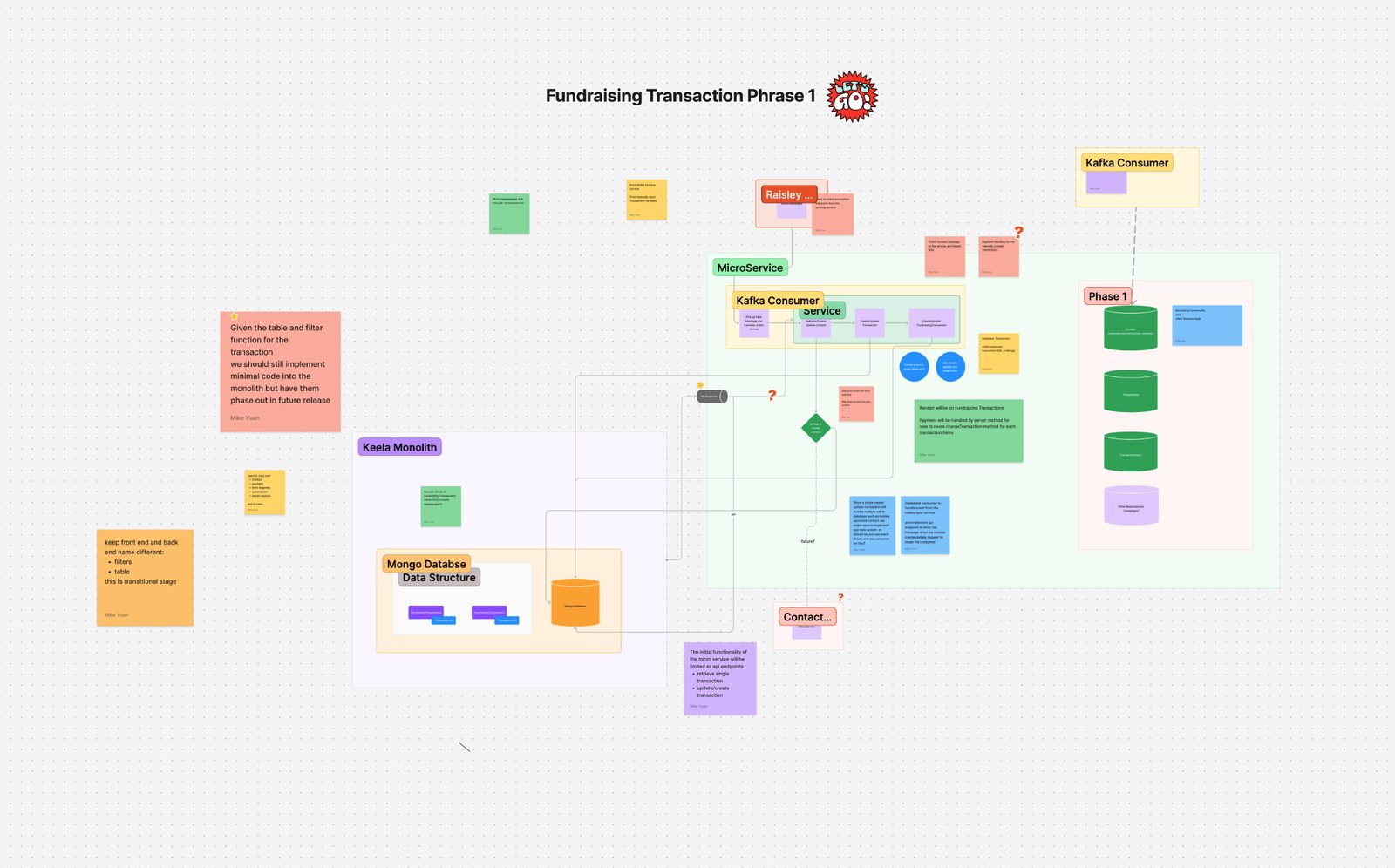
The easy path was a one-off split screen for the loudest complaint. I pushed for extensibility instead, so the next capability wouldn't need a rewrite. Before designing, the PM, the engineering lead and I agreed on what we couldn't do: no backend refactor, no breaking the data model behind reporting. We shipped in phases.
The Design
Four changes, each answering something the accountants showed us. Suggested categories became a platform rule I later wrote into Orchid's guidelines, and the new design validates continuously instead of at report time.
| Before | After | |
|---|---|---|
| 1 | One type per payment. A gala ticket that was part donation, part value received had to be logged as several records. | One payment, split by purpose. Donation, in-kind gift and value received live in a single transaction. |
| 2 | Categorizing by hand. Every transaction started blank, and accountants kept a parallel spreadsheet. | Smart defaults, human override. A suggested category from donor history, amount and fund, accepted in one click. |
| 3 | "Death by checkbox." A flat table where batch edits meant ticking rows one at a time. | Batch by context. Scope by date range, donor, fund or category, then act on the group. |
| 4 | Errors at report time. A miscategorized transaction stayed invisible until the final report. | Continuous validation. Each reporting period shows its health as you go. |
Try itChange an amount, type or fund and watch the receipt follow. Then compare it with the product before the redesign.
Iteration Was the Work
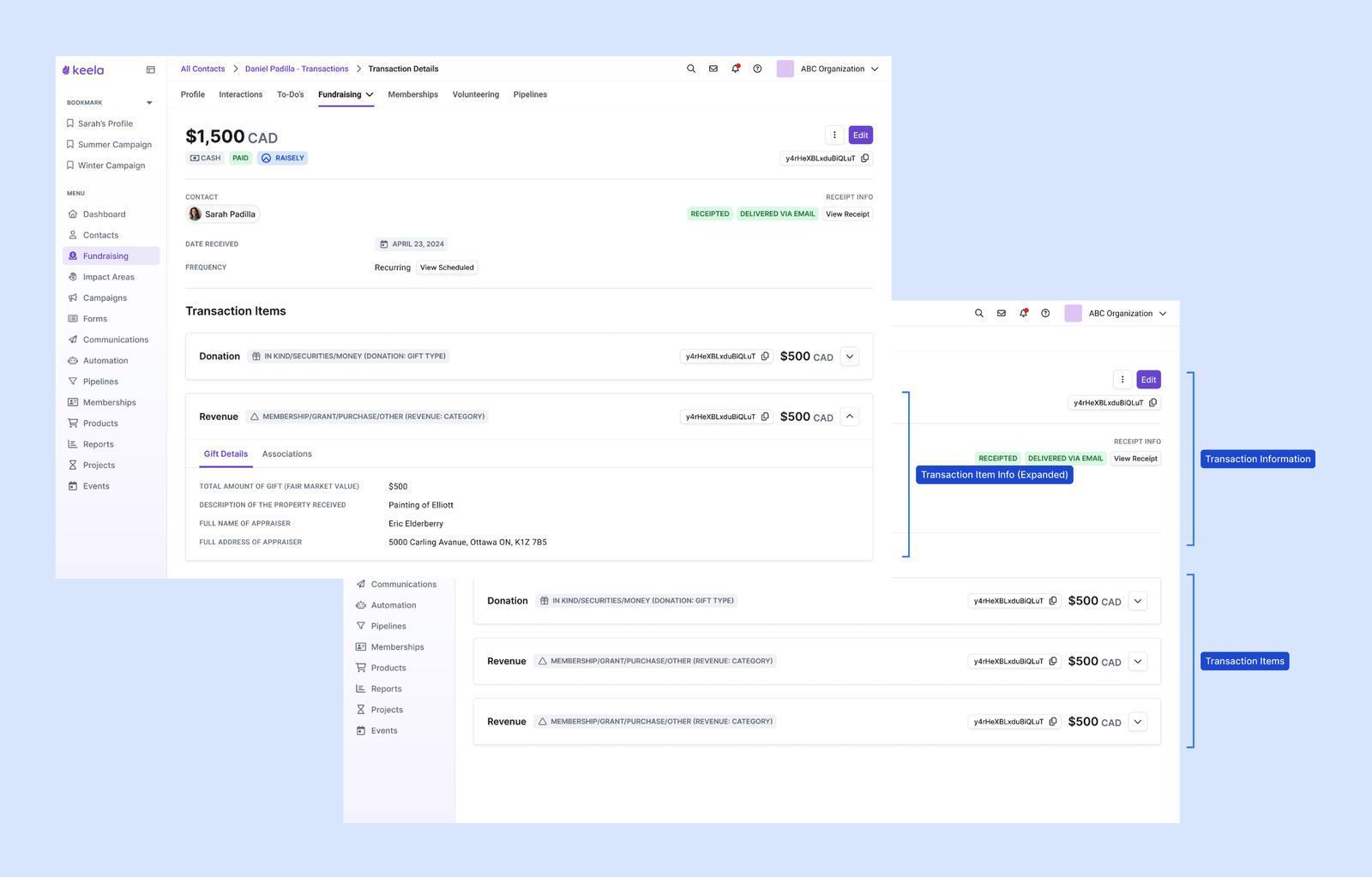
I tested early prototypes with 8 organizations. Moving from a modal to a full-screen split workflow lifted satisfaction from 5.5 to 8.8 out of 10. The transaction details view took three rounds: V1 changed little (6/10), V2 borrowed patterns from across the suite (7.5/10), and V3 put the items first and the associations second (9.5/10).
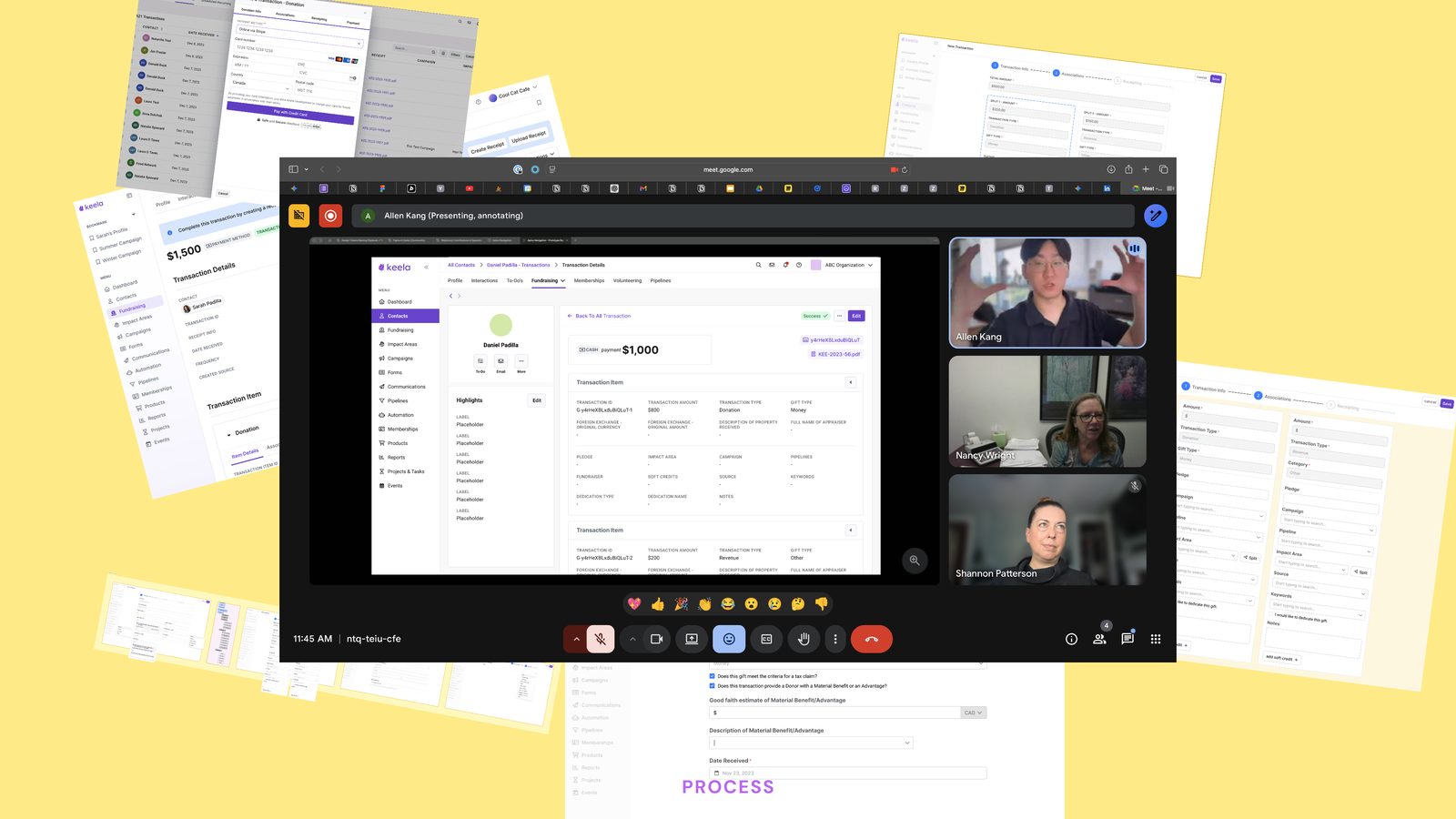
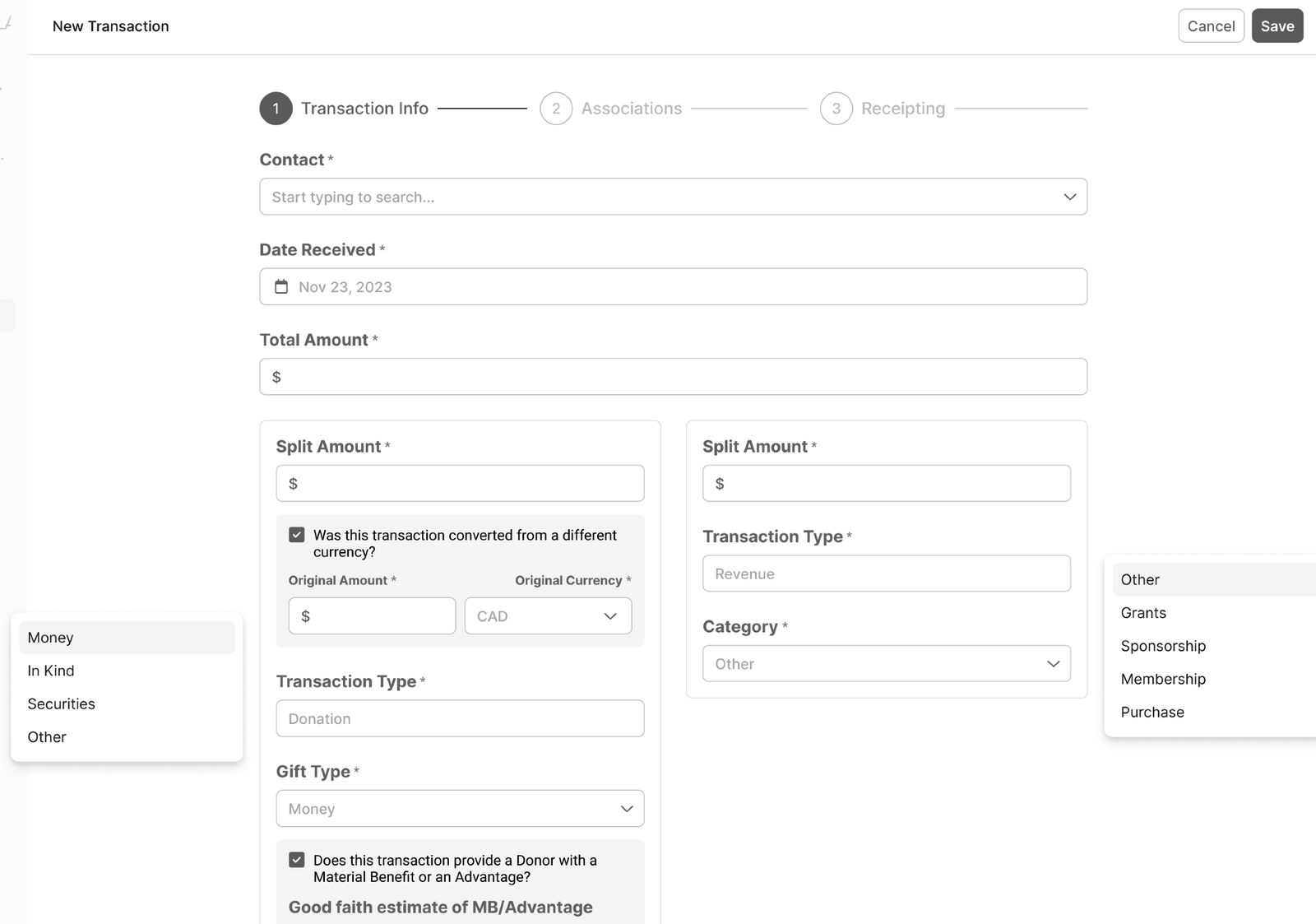
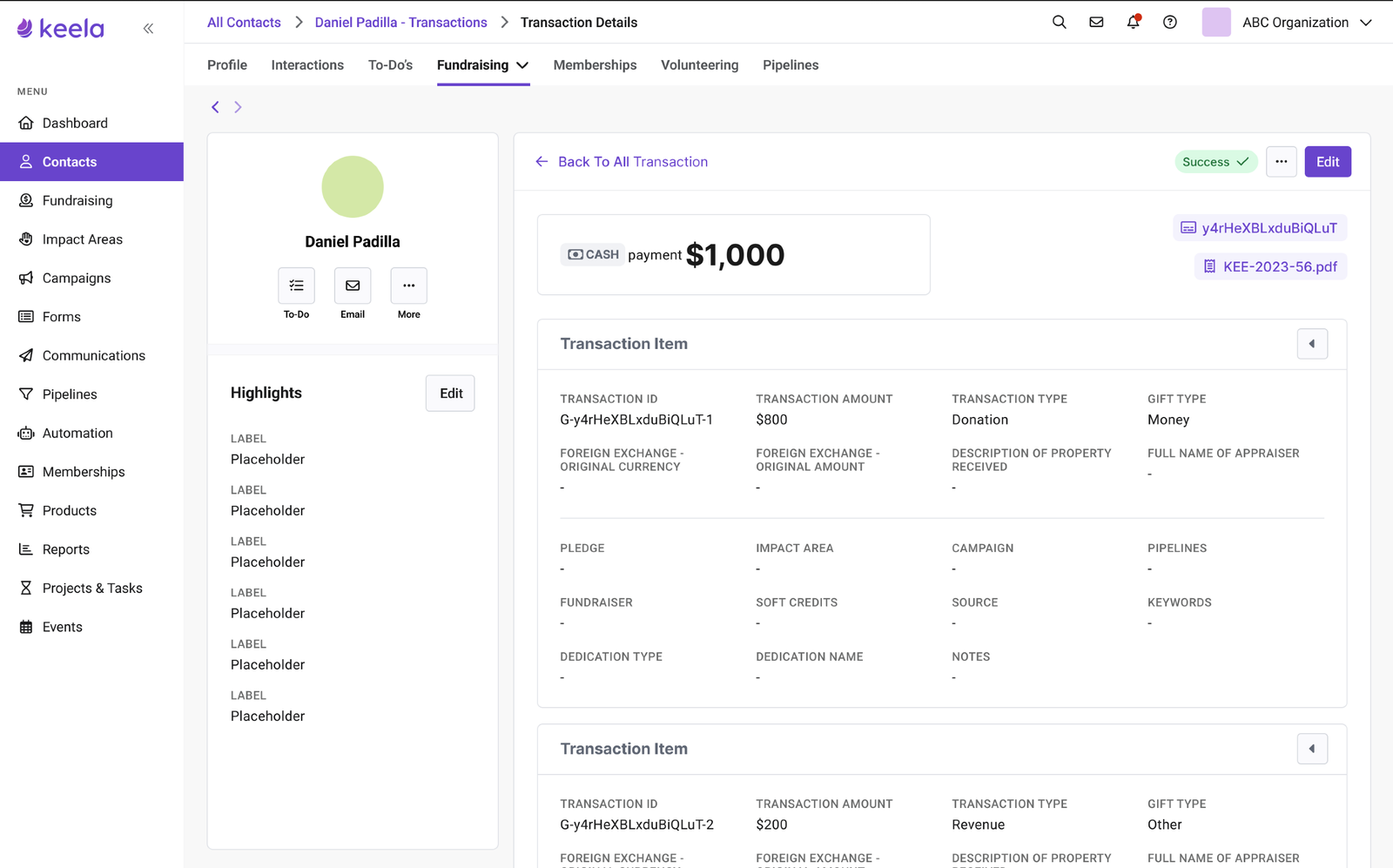
V3 won because it matched how accountants think: what they're recording first, who it belongs to second. Feature flags made the rollout safe.
What Happened
In the first month, categorization support tickets fell 70% and manual adjustments 60%. The work supported $1.8M ARR in connected accounts, and one payment could finally be recorded the way it happened, compliant across Canadian, US and Australian tax rules. The most important artifact was the system map I drew in week one, not any Figma file.

Thanks for reading.