Core Psychological Themes → Schemas
Emotional difficulties arise predominantly from unmet core needs in childhood and adolescent development, which lead to maladaptive schemas and coping styles.
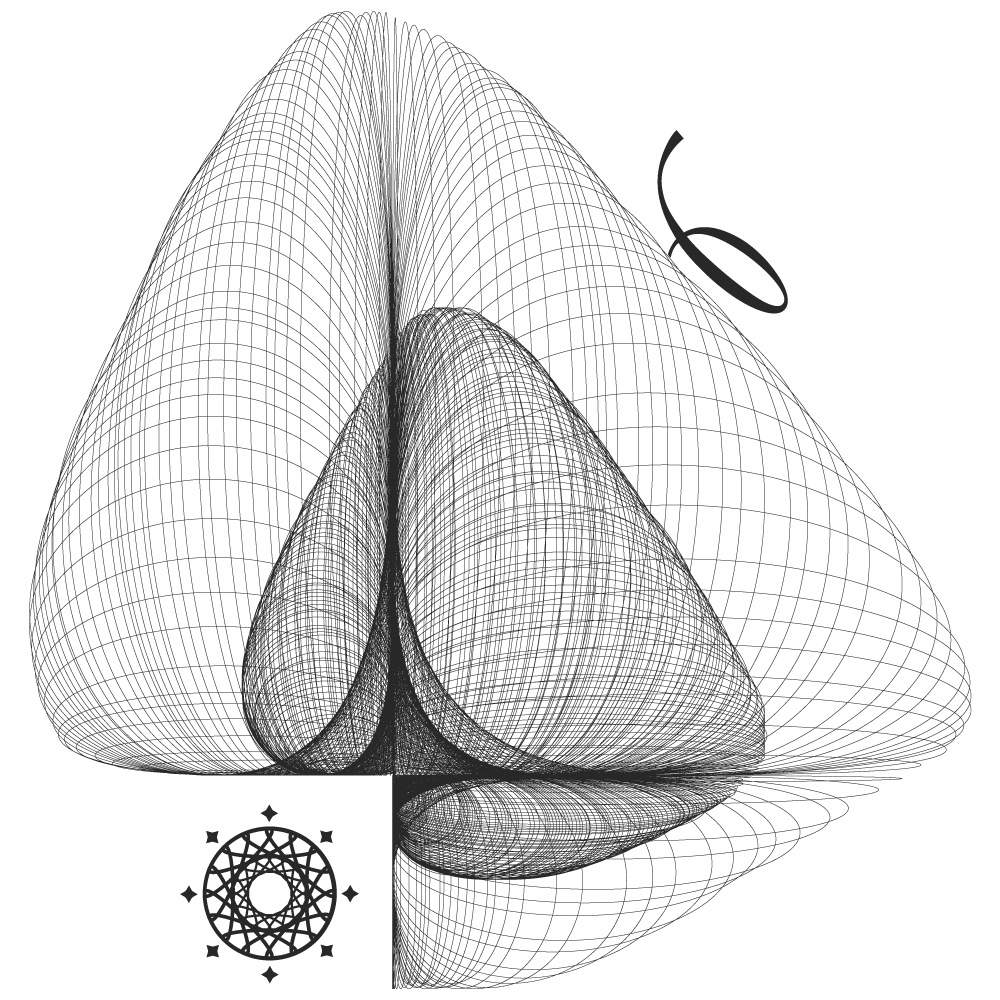
Visualization of Broad, pervasive, self-defeating patterns regarding oneself and one's relationships, developed in childhood and dysfunctional to a significant degree. A pattern of thought or behavior that organizes categories of information and the relationships among them — a mental framework for making sense of the world.
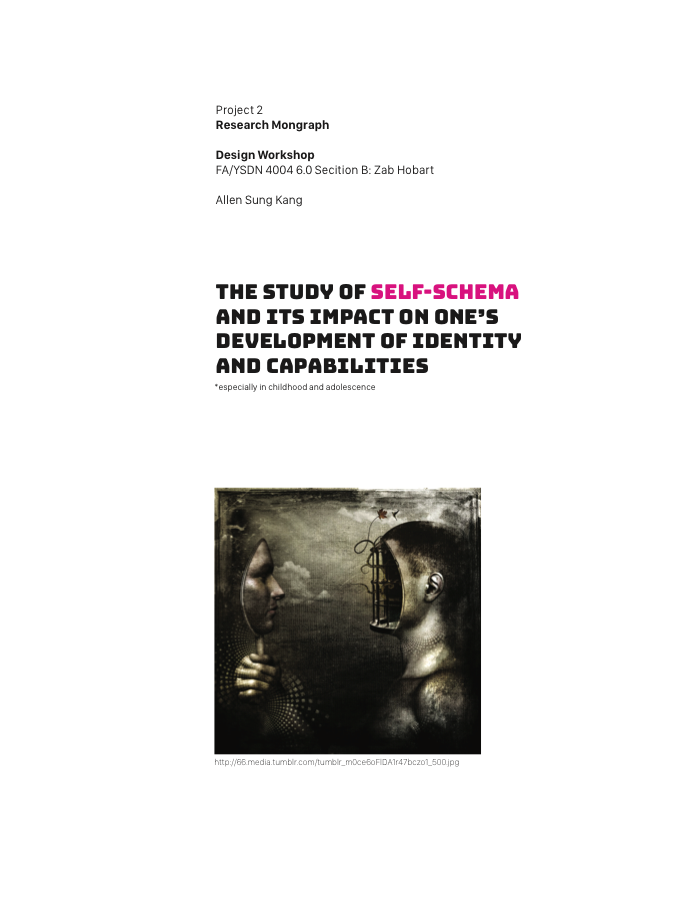
↓Schematic explores how much the knowledge of a single psychological concept — the self-schema — can shape childhood and adolescent development. Because the idea lives in the field of psychology, there are no definite yes-or-no answers. The project does not take a side; it raises awareness of the idea of the self.
The necessity of the work lies in a simple fact: countless people are clueless and confused about the "self." As Psychology Today notes, "self-knowledge is practically impossible to attain… but you can achieve greater objectivity and insight by tuning into a few tested principles." The purpose is to make that architecture visible — and, in doing so, contribute both to the discipline and to anyone exposed to it.
Broadly, this research touches all human beings, but within the span of a workshop it is narrowed to children and millennials. The impact it may bring is abstract rather than tangible — yet it can lead to concrete outcomes depending on one's willingness to reflect and to accept.
This site presents that original 2016 project as an archive, with added structure and curated resources for anyone who wants to understand the model further. It is educational — not medical advice or a diagnostic tool.
"A pattern of thought or behaviour that organizes categories of information and the relationships among them."
"Broad, pervasive themes regarding oneself and one's relationship with others, developed during childhood and elaborated throughout one's lifetime — and dysfunctional to a significant degree."
If an individual was abandoned, abused, neglected, or rejected in childhood, their maladaptive schemas can be triggered by later events they perceive as similar. When a schema fires, it can bring strong negative emotions — grief, shame, fear, or rage. Not every schema is rooted in trauma, but all are self-defeating to some degree, and most are the cumulative product of noxious experiences repeated throughout childhood and adolescence.
Emotional difficulties arise predominantly from unmet core needs in childhood and adolescent development, which lead to maladaptive schemas and coping styles.
Characteristic coping styles are the responses a person builds around a schema in order to survive it:
A mode is the moment-to-moment cluster of schemas and coping responses that dominates a person at a given time — the emotional state one flips into (a "vulnerable child" or "punitive parent" mode, say). Schema work happens at the level of these shifting modes, not just fixed traits.
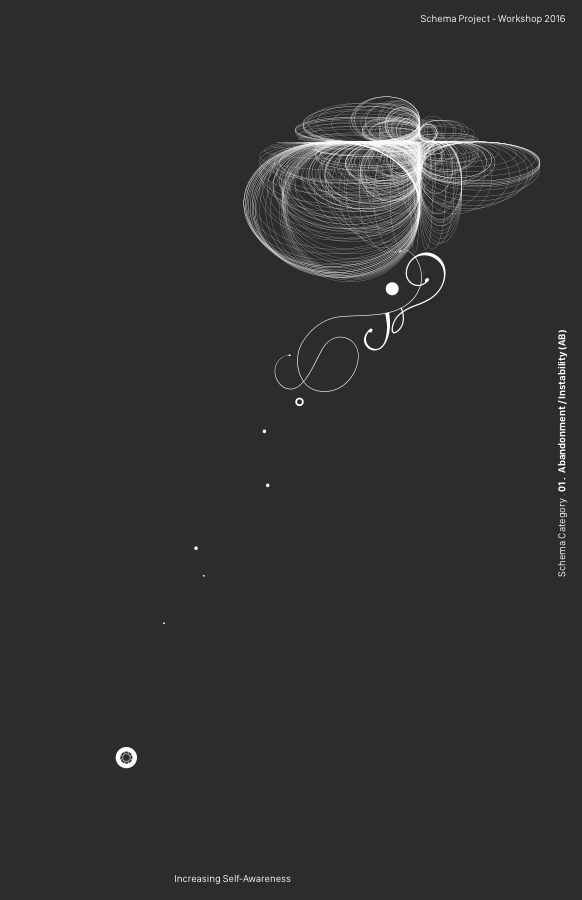
Young's schema model groups eighteen early maladaptive schemas into five domains, each tracing back to a core childhood need that went unmet. Every schema is rendered here as its own generative form. Tap any poster to read the full description.
Take a short, private reflection — or describe what you've been feeling. Either way you'll land on the schemas that tend to fit. A mirror, not a diagnosis.
Everything runs on your device — nothing you type or tap is sent anywhere. A conversational AI guide is planned for a later phase.
Needs for safety, stability, nurturance, empathy, and belonging were not reliably met. Secure bonds feel unsafe or out of reach.
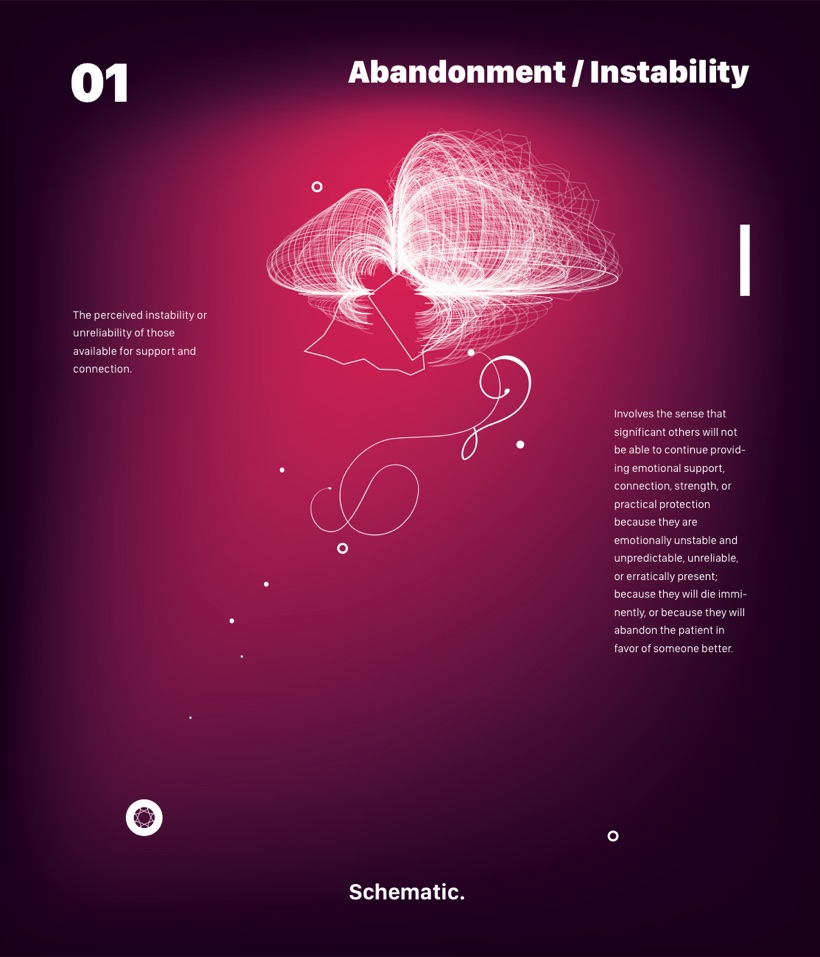
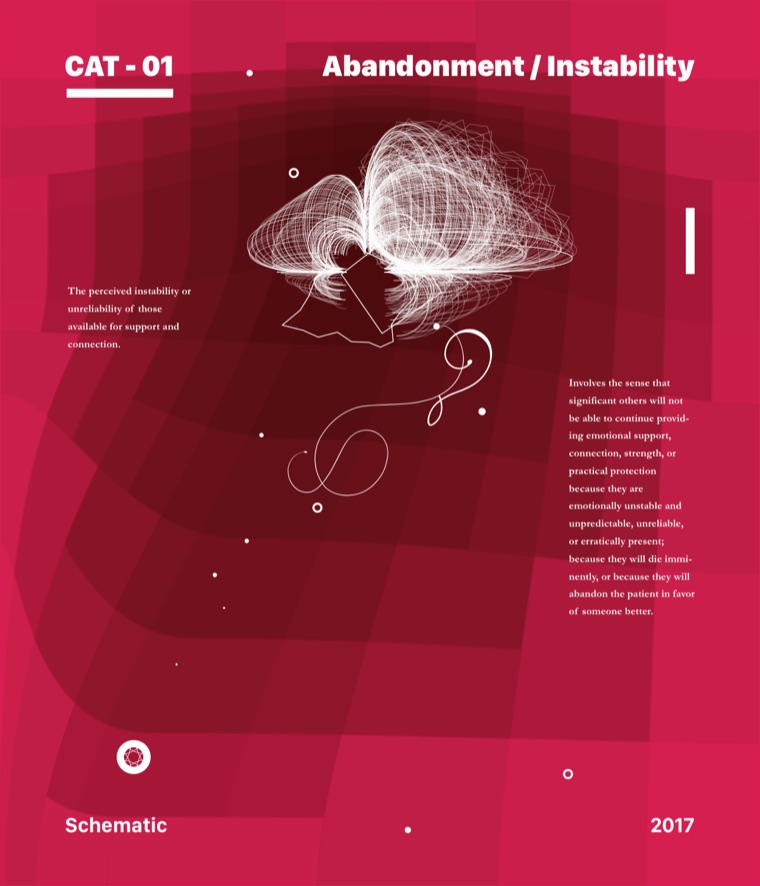
The perceived instability or unreliability of those available for support and connection.
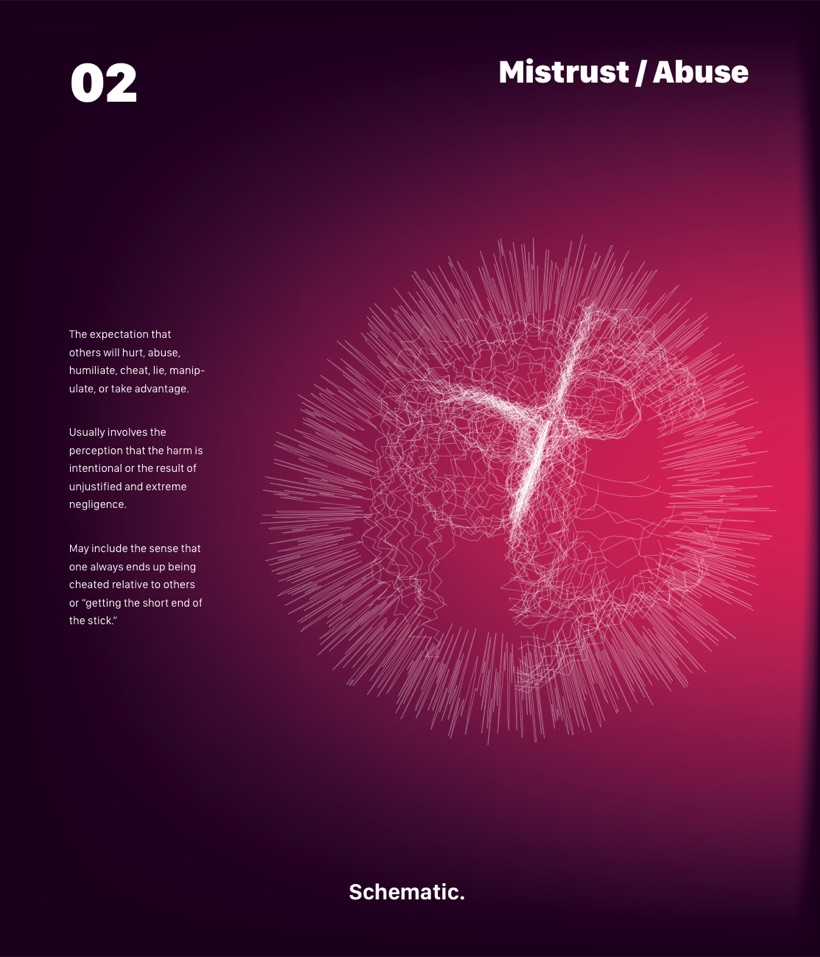
The expectation that others will hurt, abuse, humiliate, cheat, lie, or take advantage.
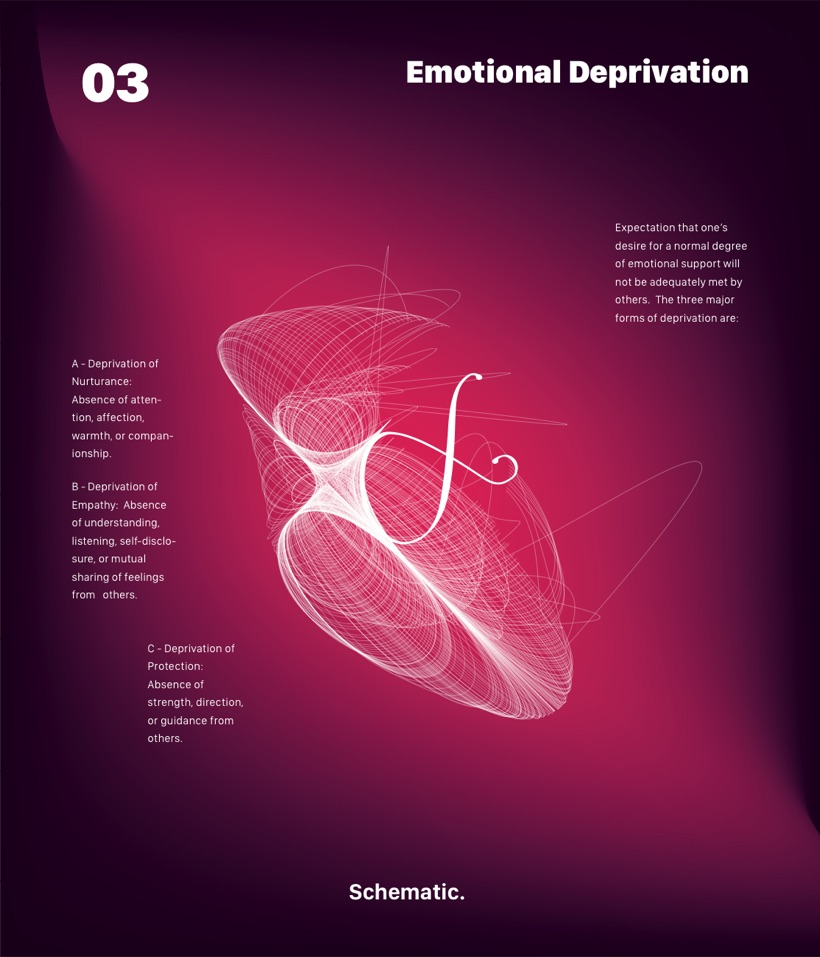
The expectation that one's need for a normal degree of emotional support won't be met.
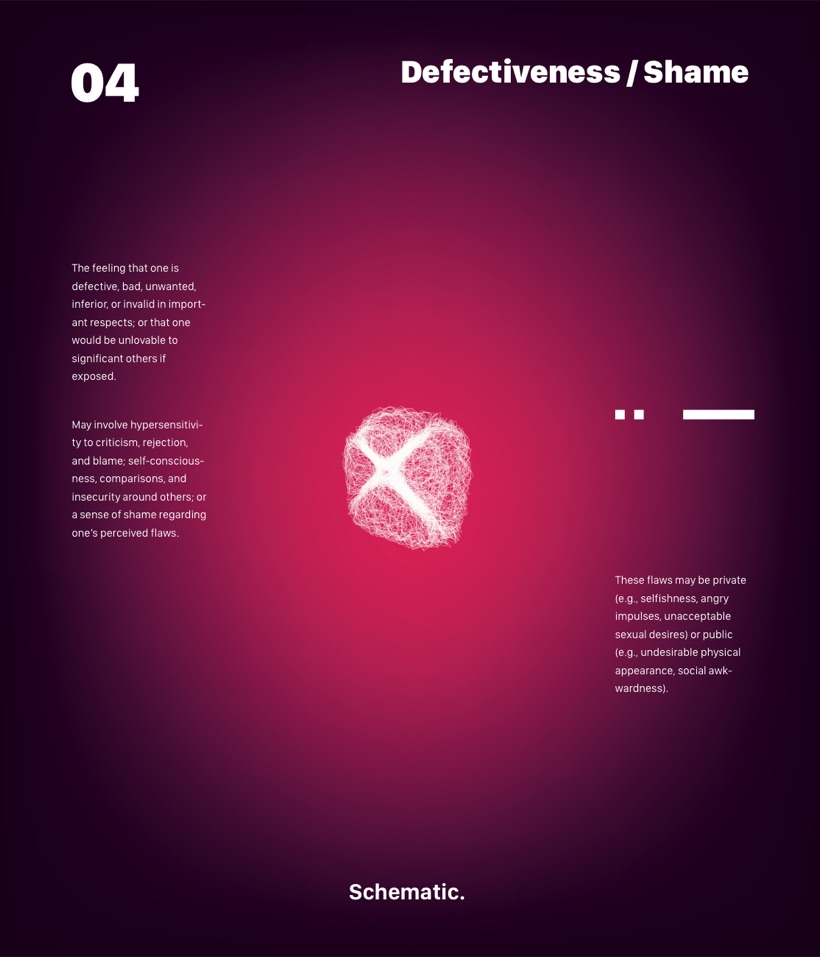
The feeling that one is defective, unwanted, or inferior — and unlovable if truly seen.
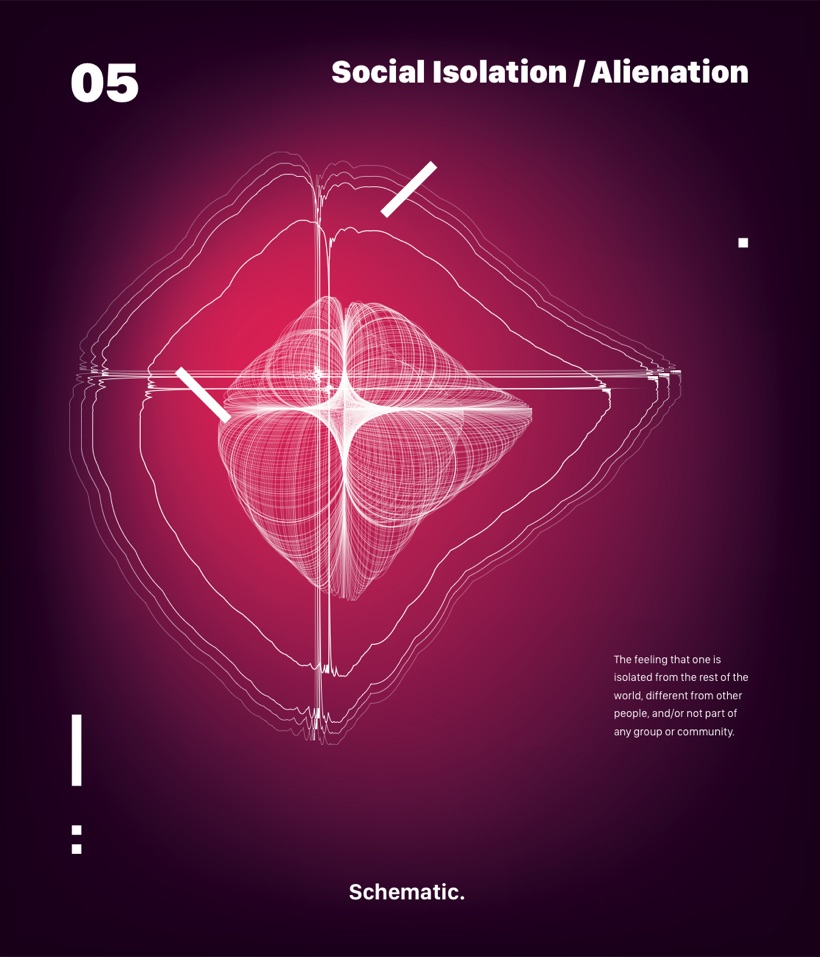
The feeling of being isolated from the world and part of no group or community.
Expectations about oneself and the world that undermine the ability to separate, function, and succeed independently.
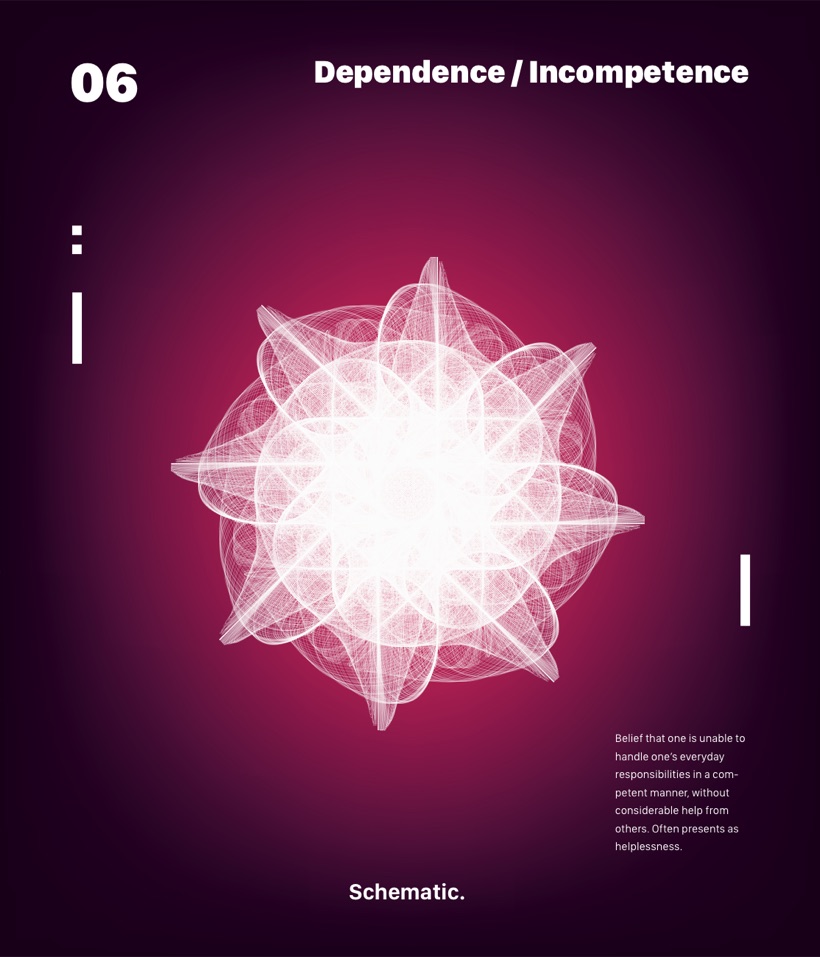
The belief that one cannot handle everyday responsibilities competently without help.
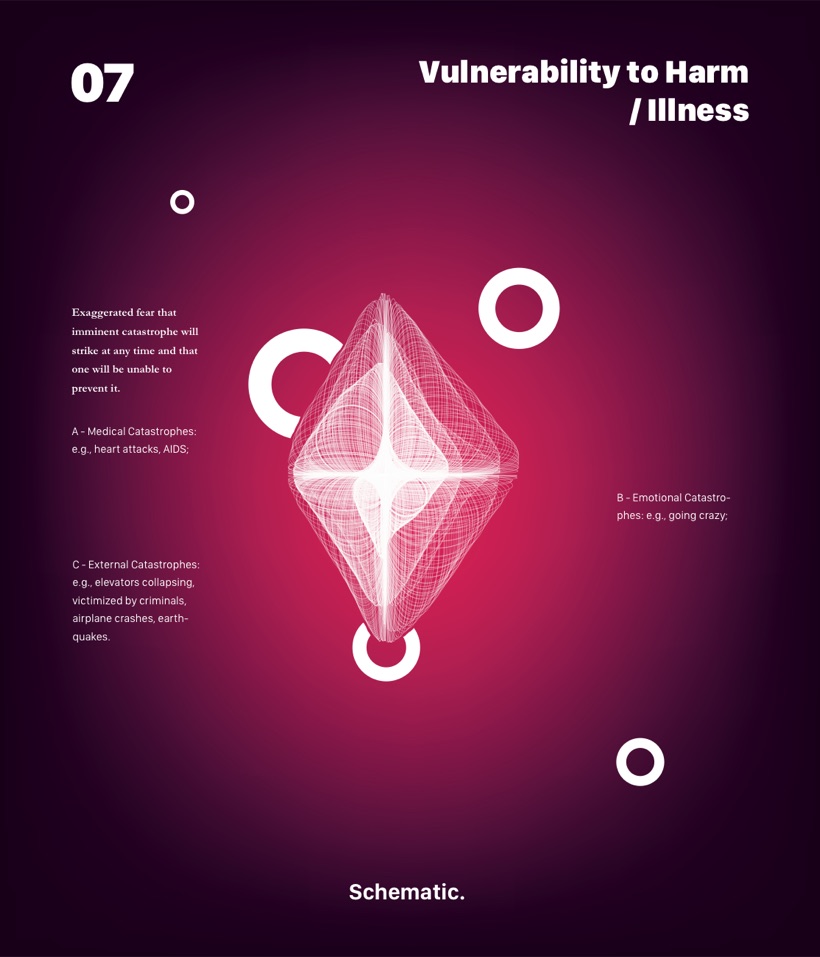
An exaggerated fear that catastrophe will strike at any moment and can't be prevented.
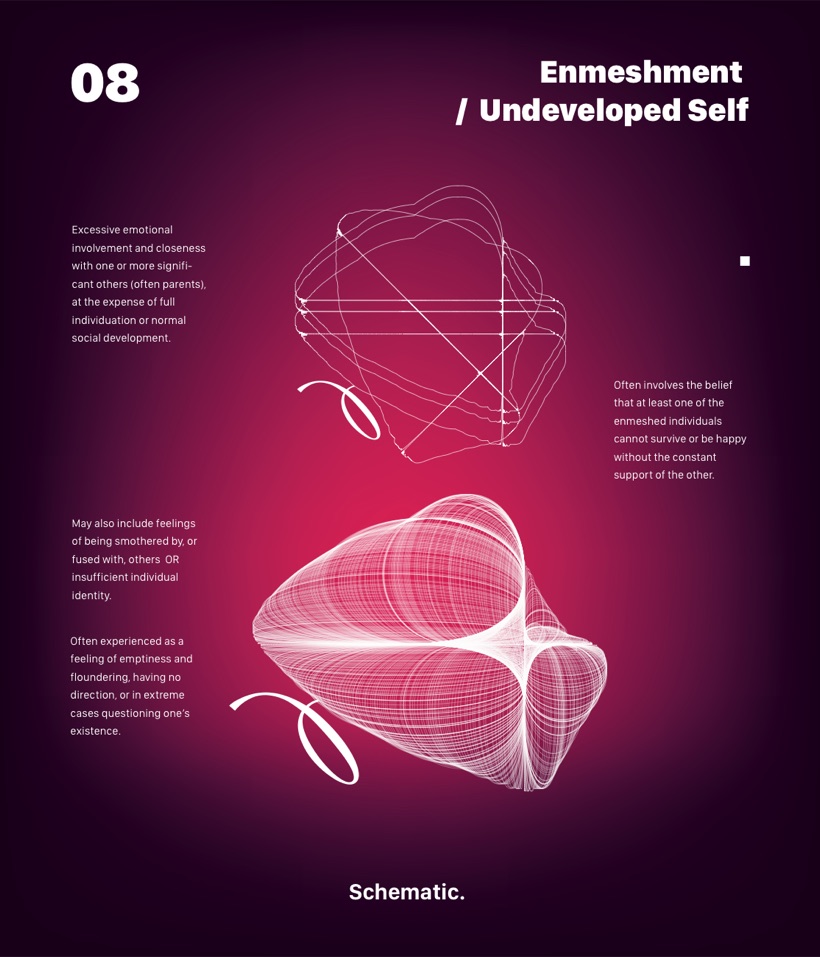
Excessive closeness with others at the expense of individuation and a normal identity.
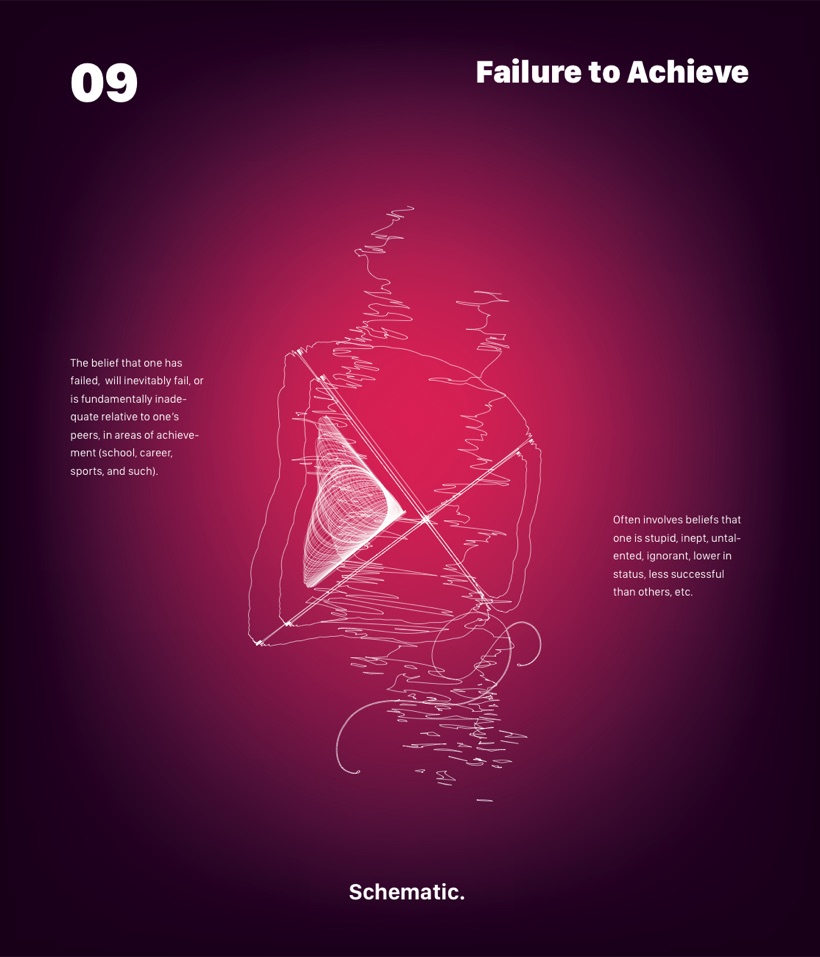
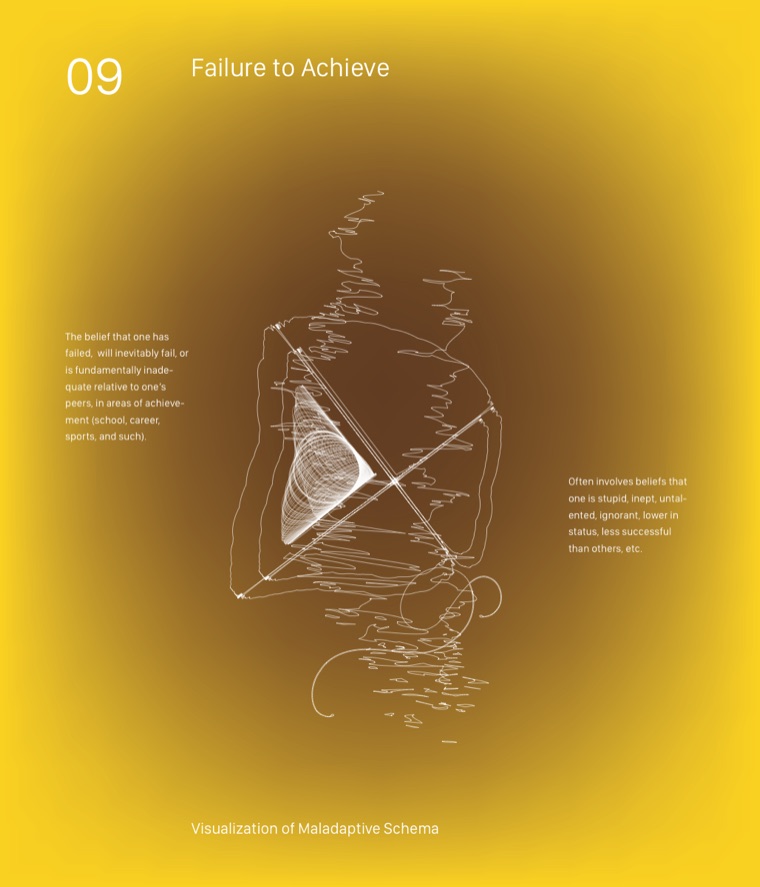
The belief that one has failed, or will inevitably fail, relative to one's peers.
Difficulty with internal limits, responsibility to others, and orientation toward long-term goals.
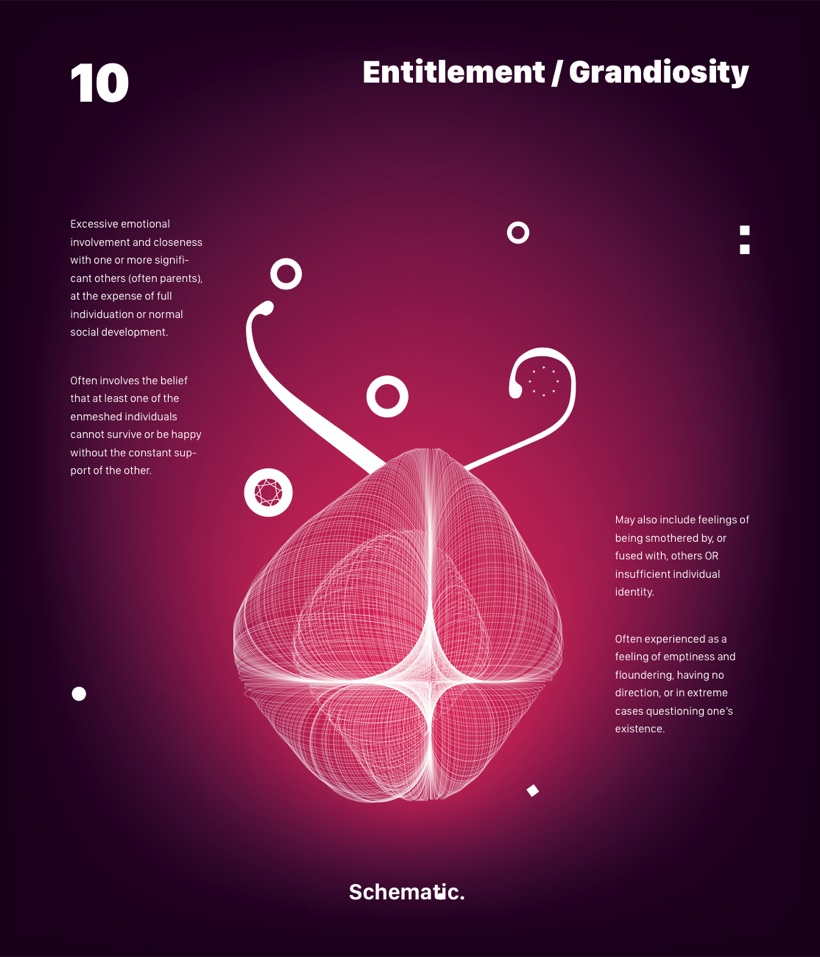
The belief that one is superior and entitled to special rights, free of normal limits.*
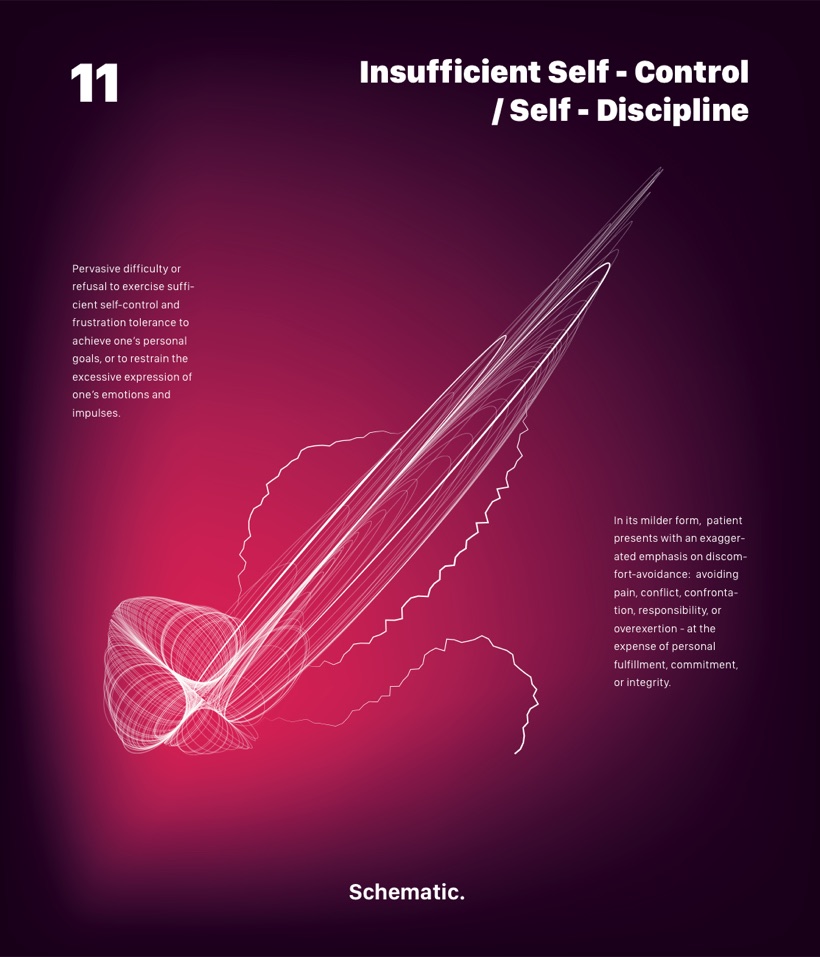
Difficulty exercising the self-control and frustration tolerance to reach one's goals.
An excessive focus on the desires, feelings, and approval of others — at the expense of one's own needs.
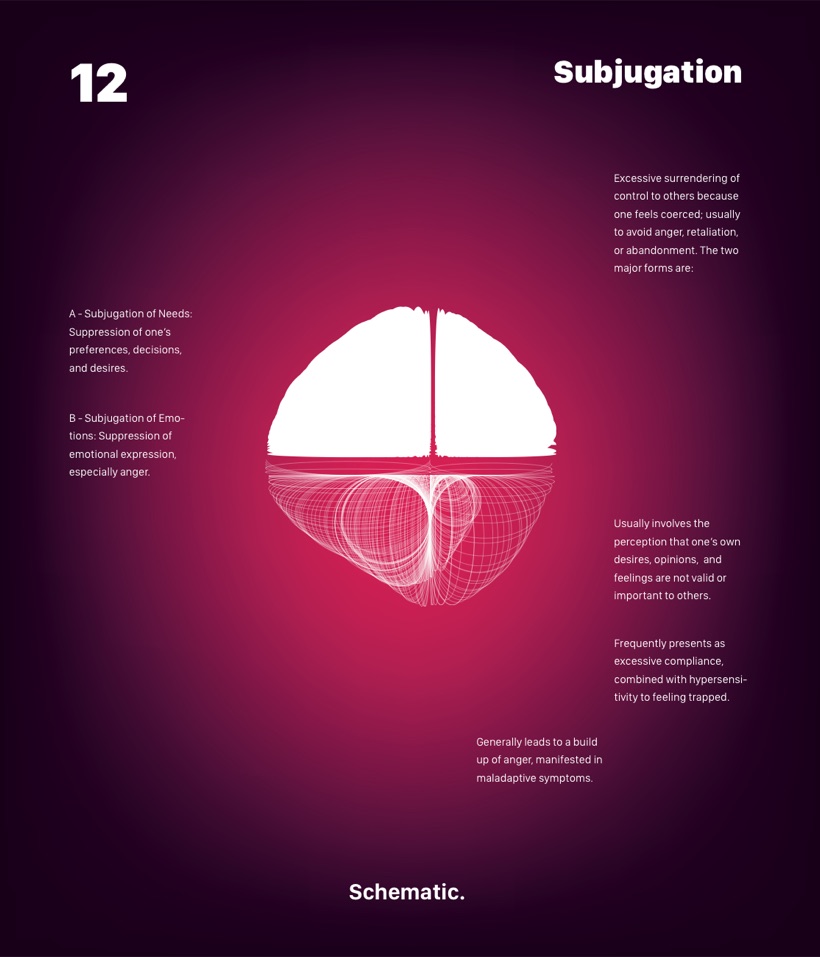
Excessively surrendering control to others to avoid anger, retaliation, or abandonment.
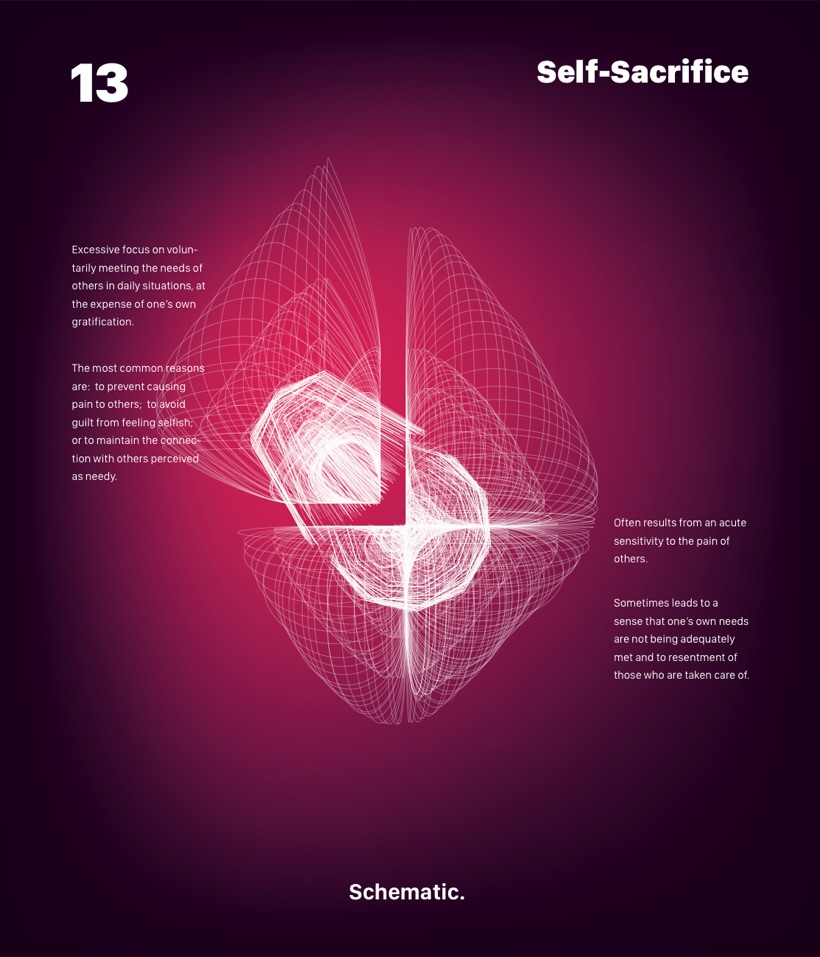
Excessive focus on meeting others' needs at the expense of one's own gratification.
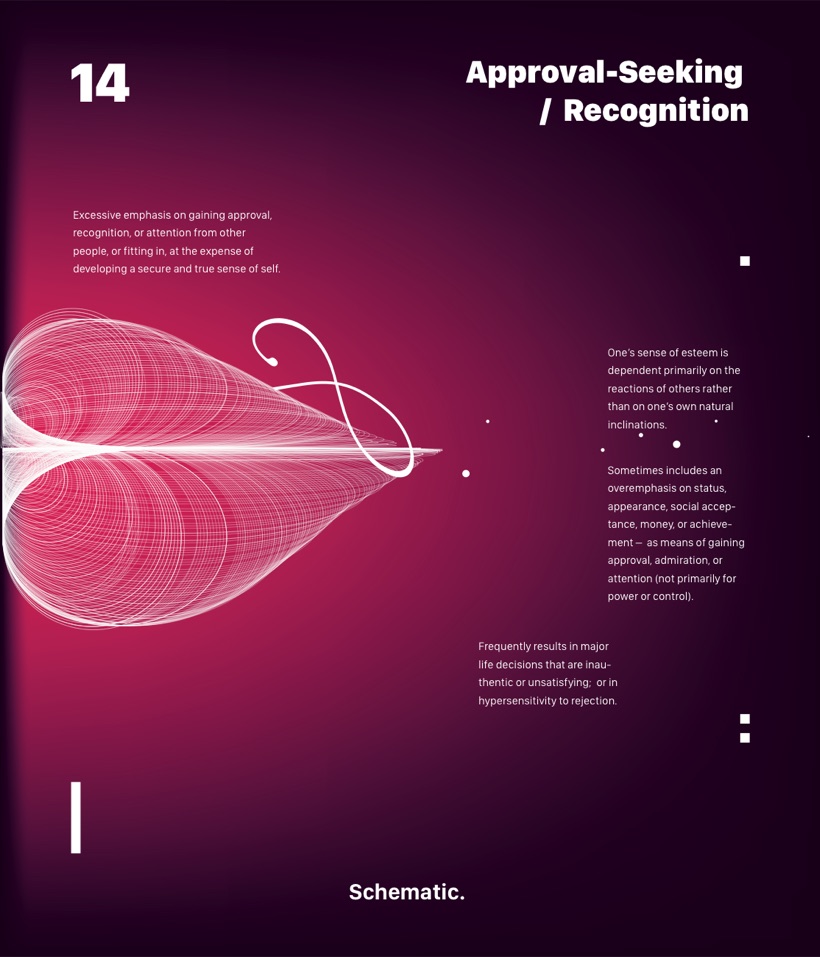
Excessive emphasis on approval and recognition at the expense of a secure, true self.
Suppressing spontaneous feelings and impulses, or meeting rigid internal rules — at the cost of ease, health, and happiness.
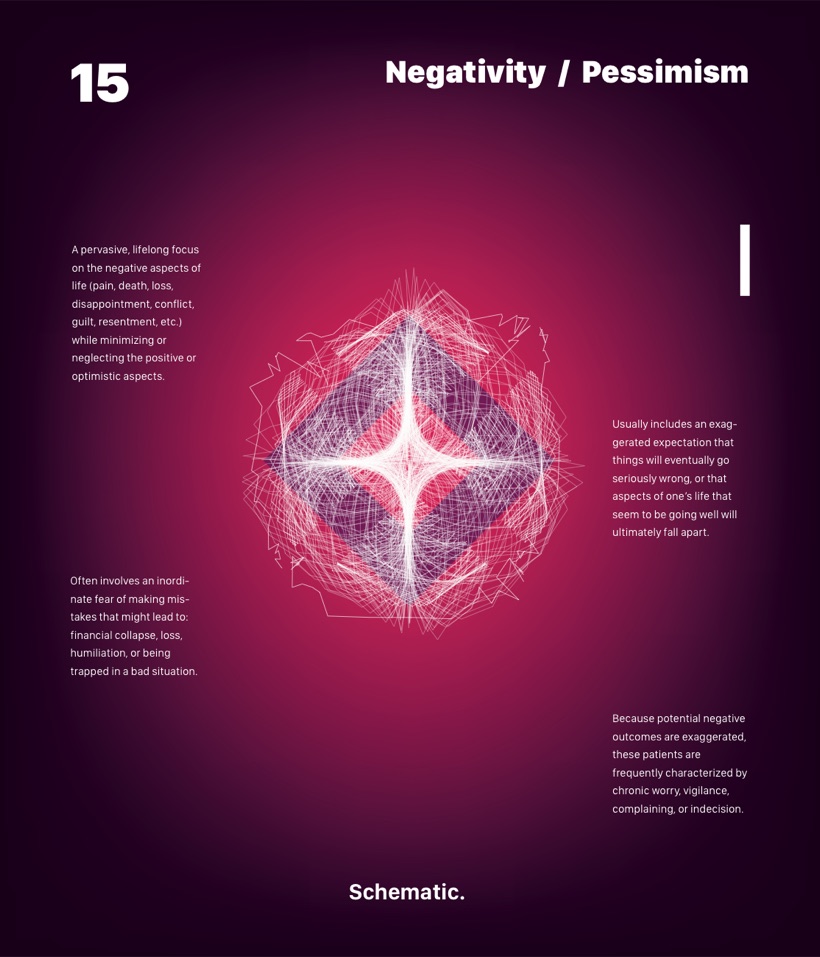
A pervasive, lifelong focus on the negative while minimizing the positive.
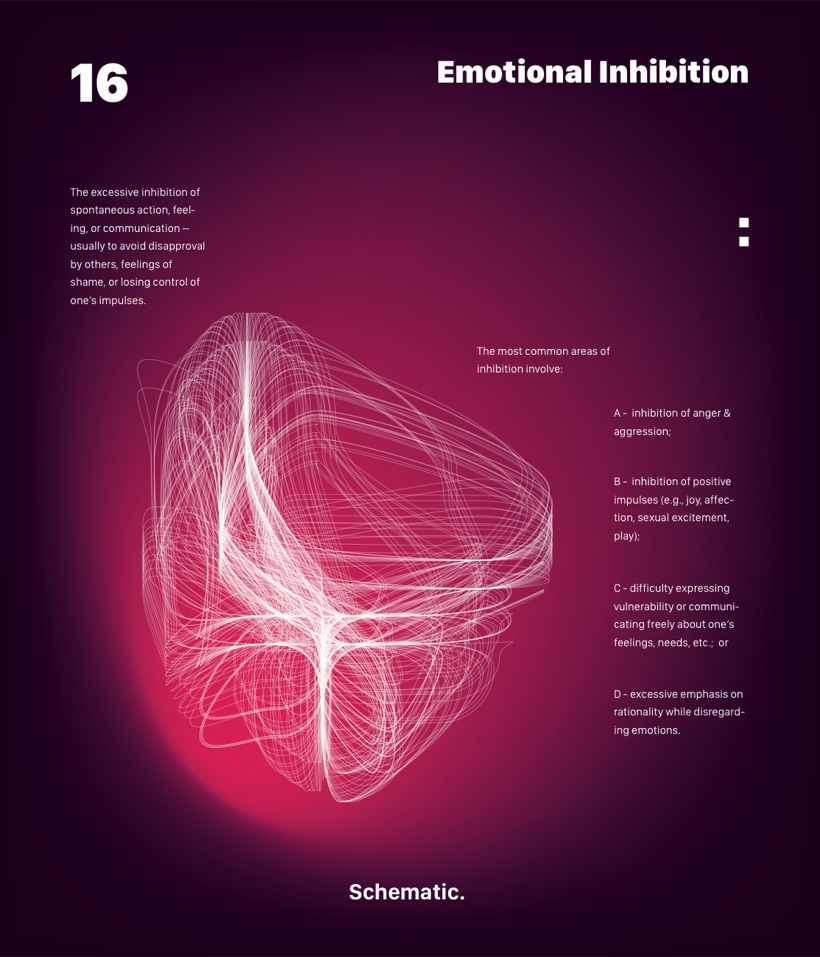
The excessive inhibition of spontaneous action, feeling, or communication.
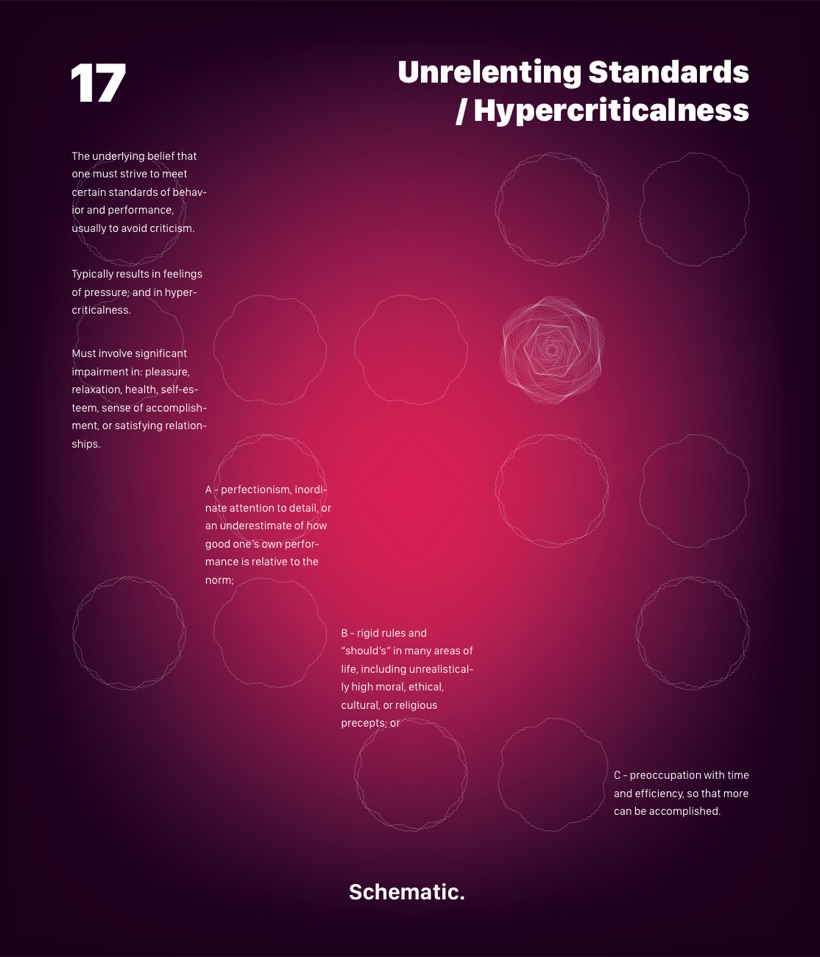
Striving to meet very high standards of behavior and performance to avoid criticism.

The belief that people should be harshly punished for making mistakes.
* Poster 10 reproduces the Enmeshment / Undeveloped Self text in the original 2016–2017 artwork; the summary shown here uses the standard definition of Entitlement / Grandiosity.
The generative line-mesh language, the visual essays, and alternate colour treatments explored along the way. Click any piece to enlarge.

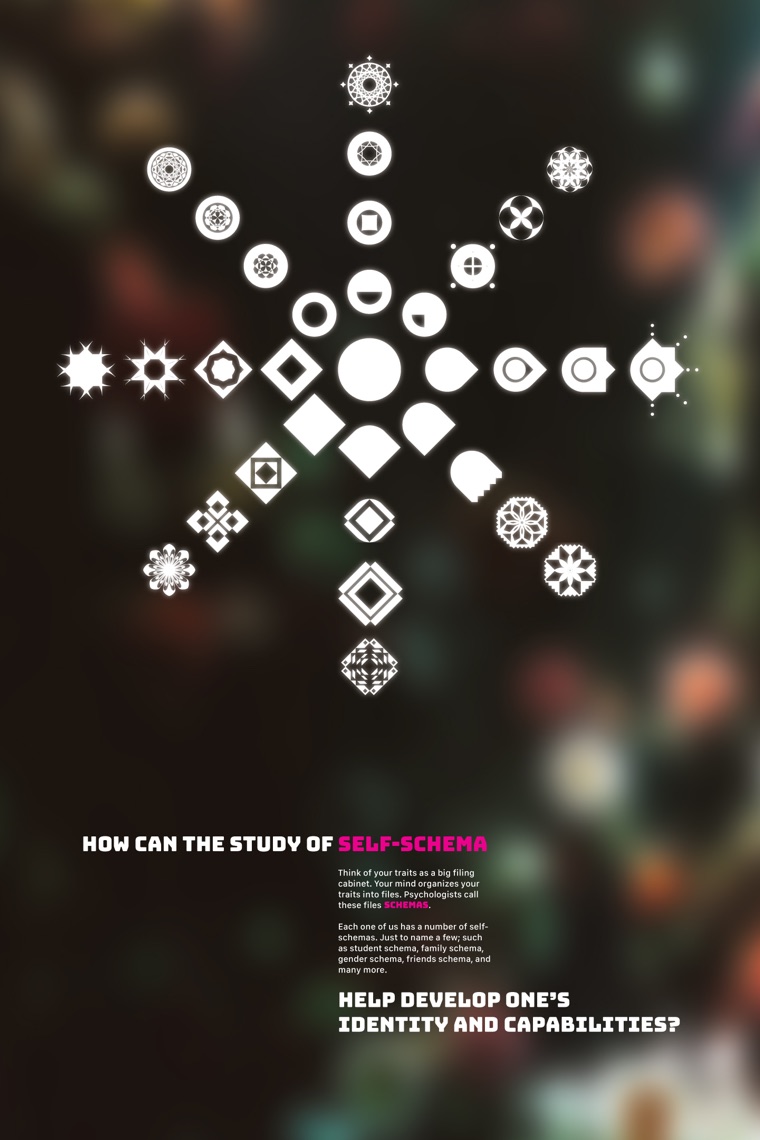


Schematic is a design project, not a clinical source. These are authoritative places to understand the model properly — and to reach real support.
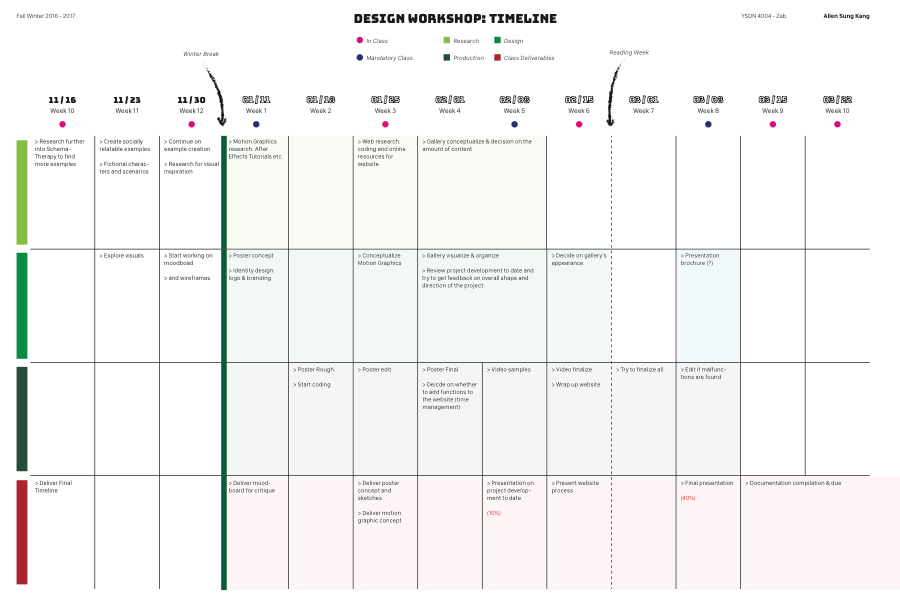
The research proposal, monograph, timeline, and poster set — as originally submitted for YSDN 4004 in 2016–2017. Click to open the PDF.